
Last updated November 21, 2026
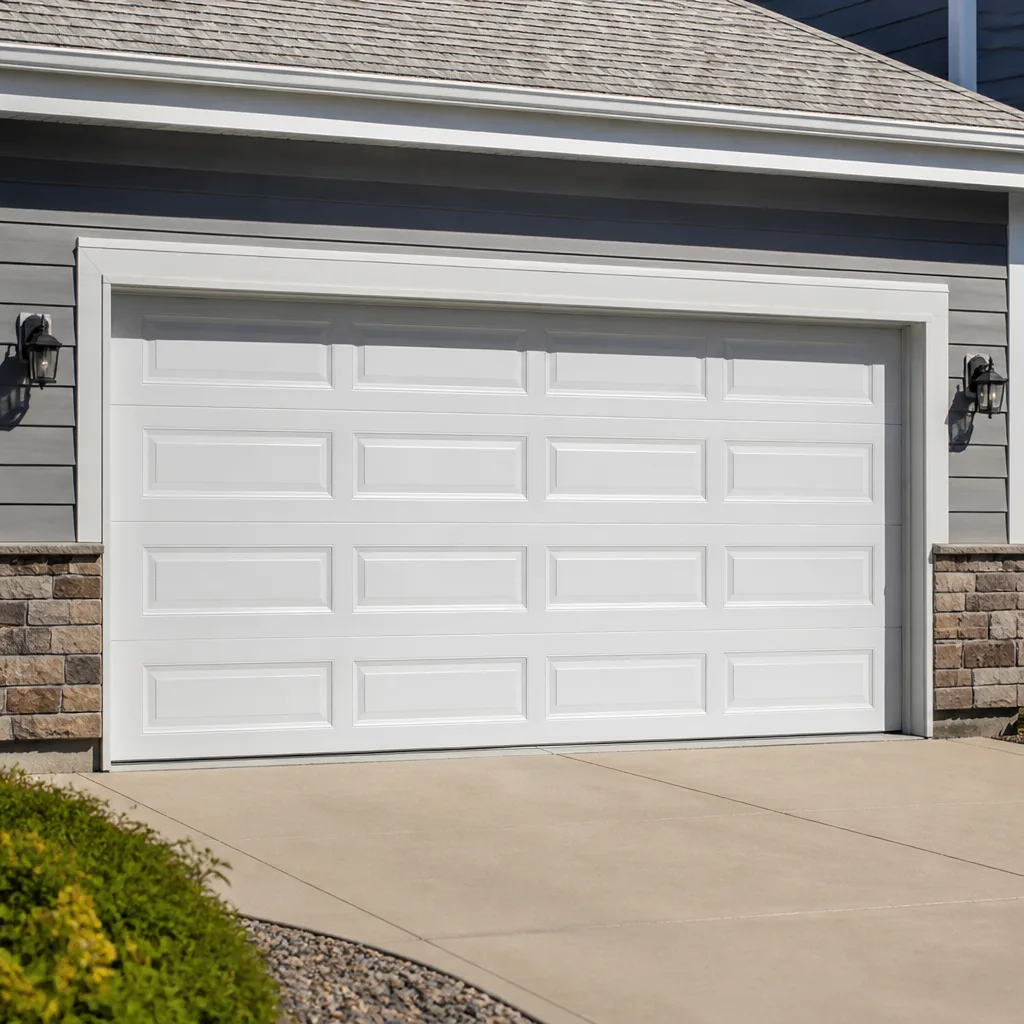 Raised-panel steel
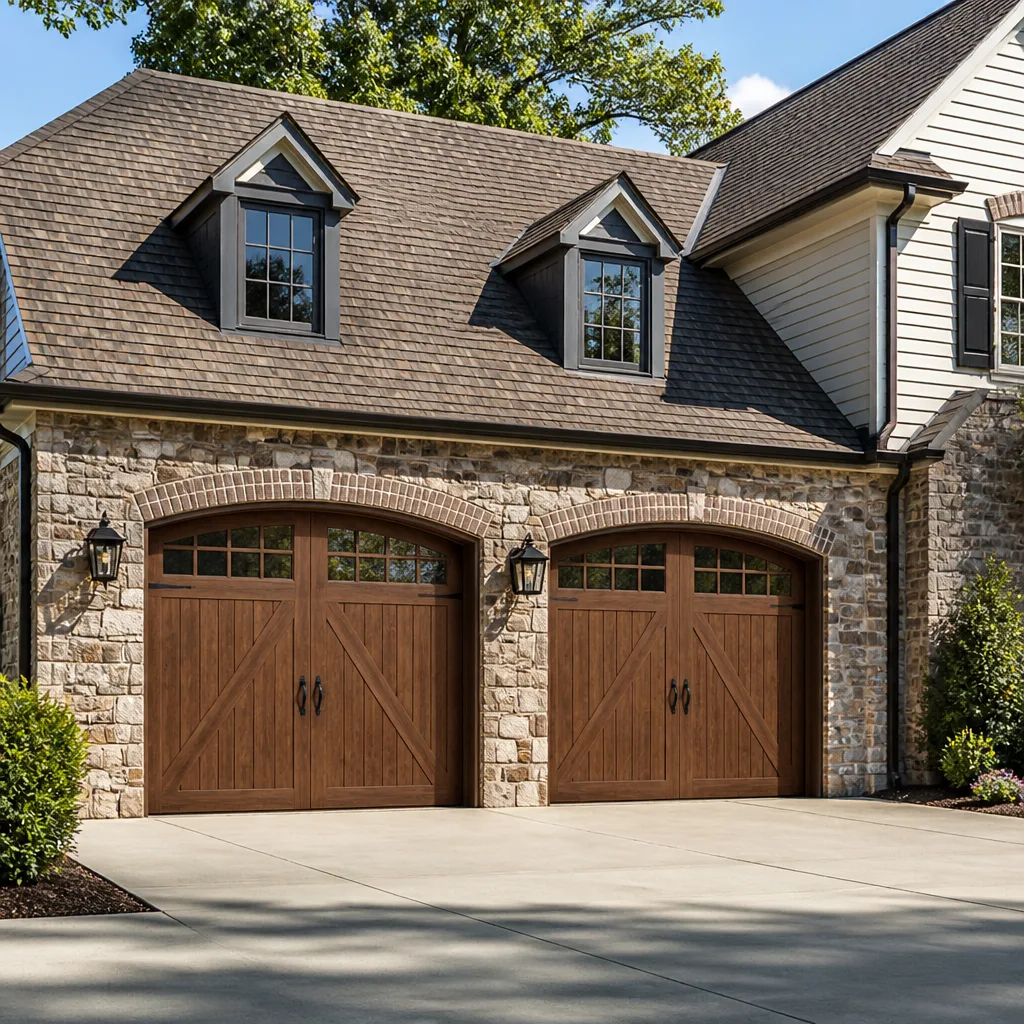 Carriage house
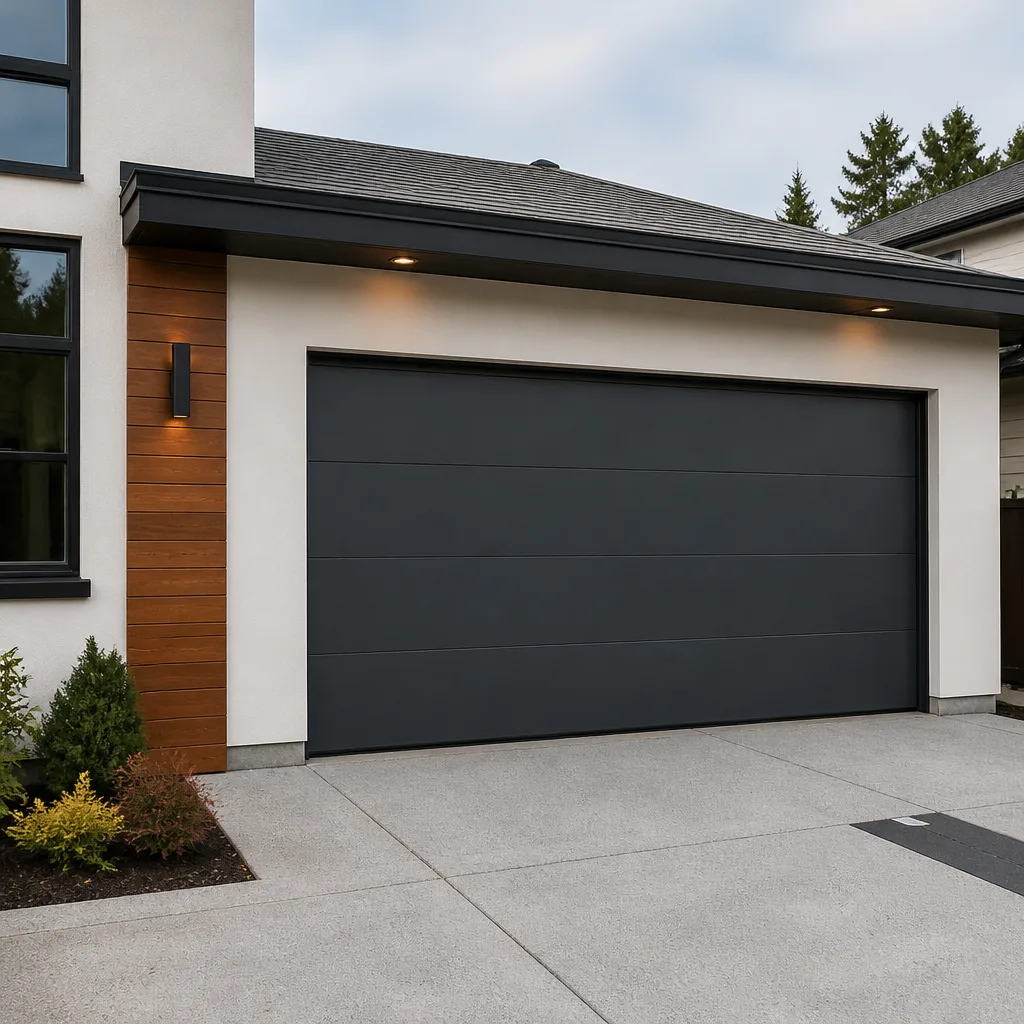 Modern flush
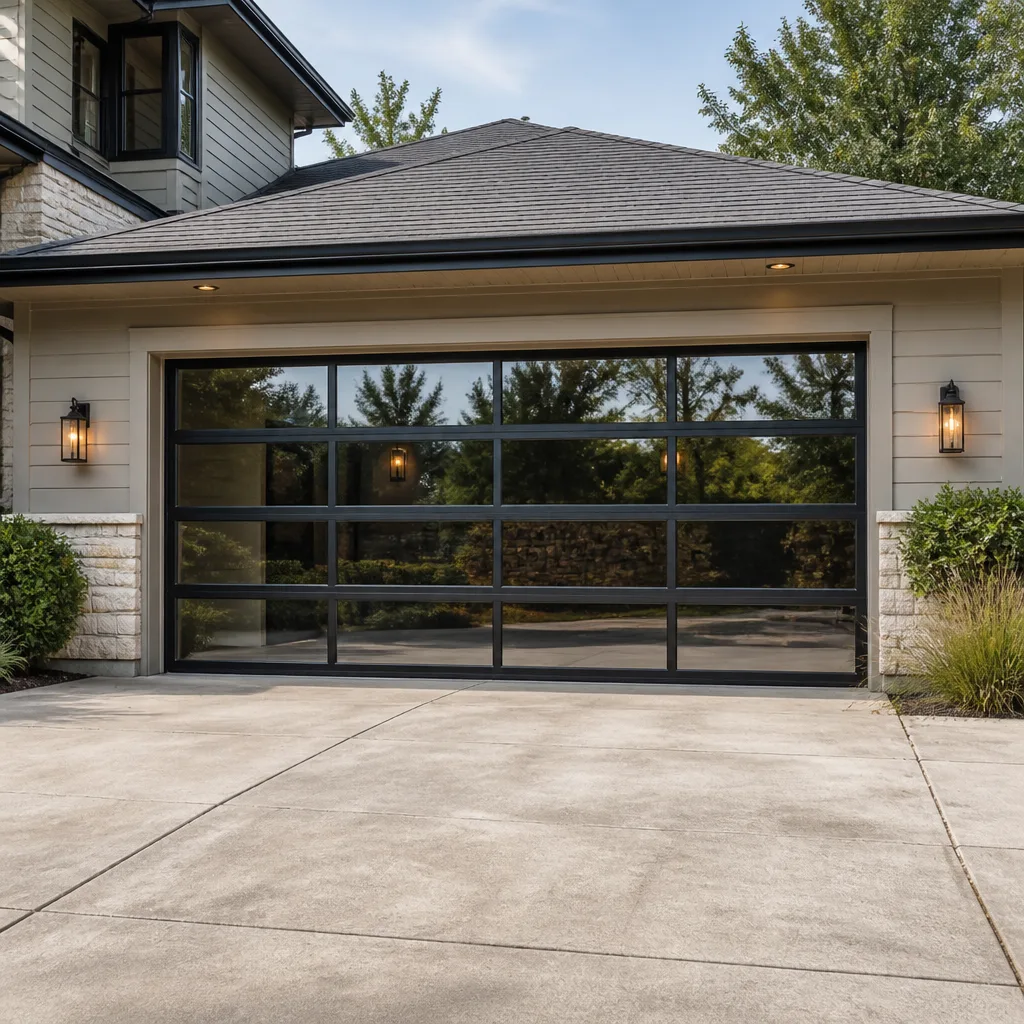 Full-view glass
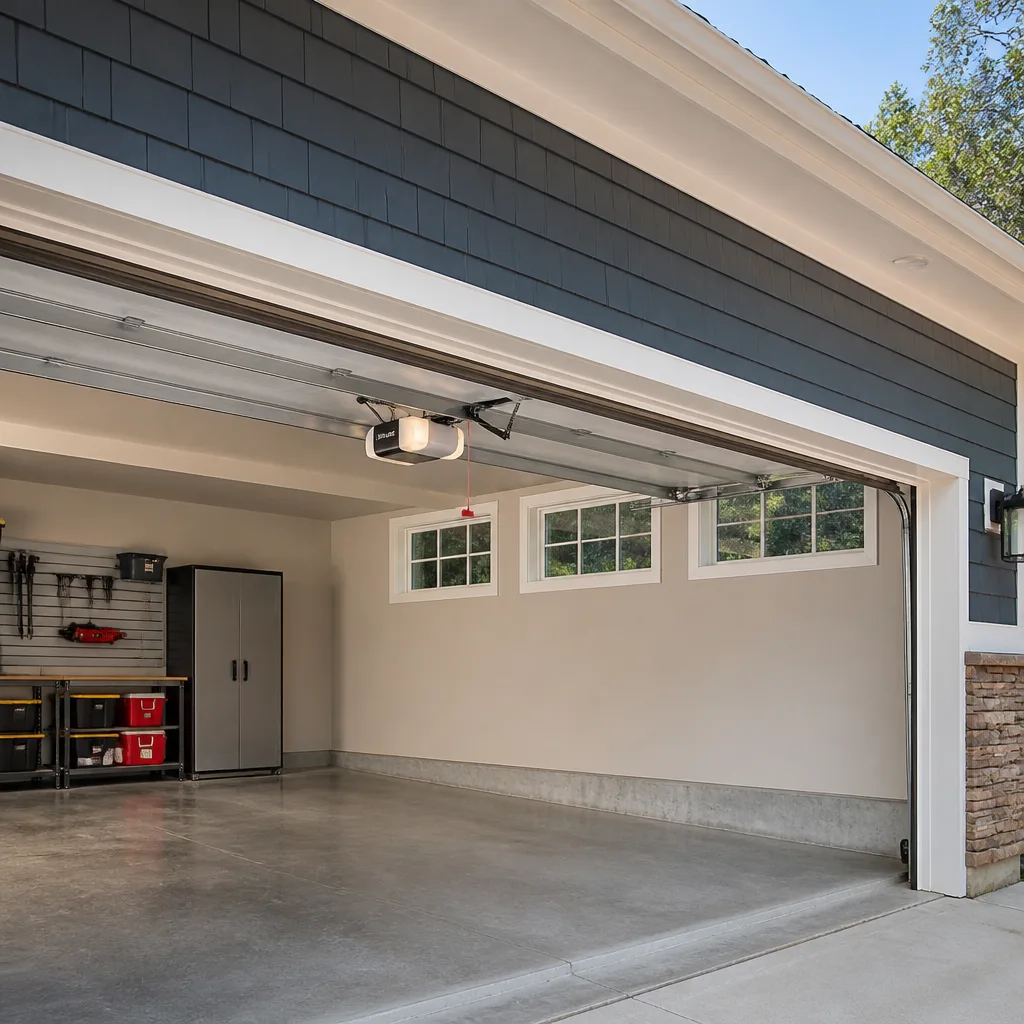 LiftMaster openers
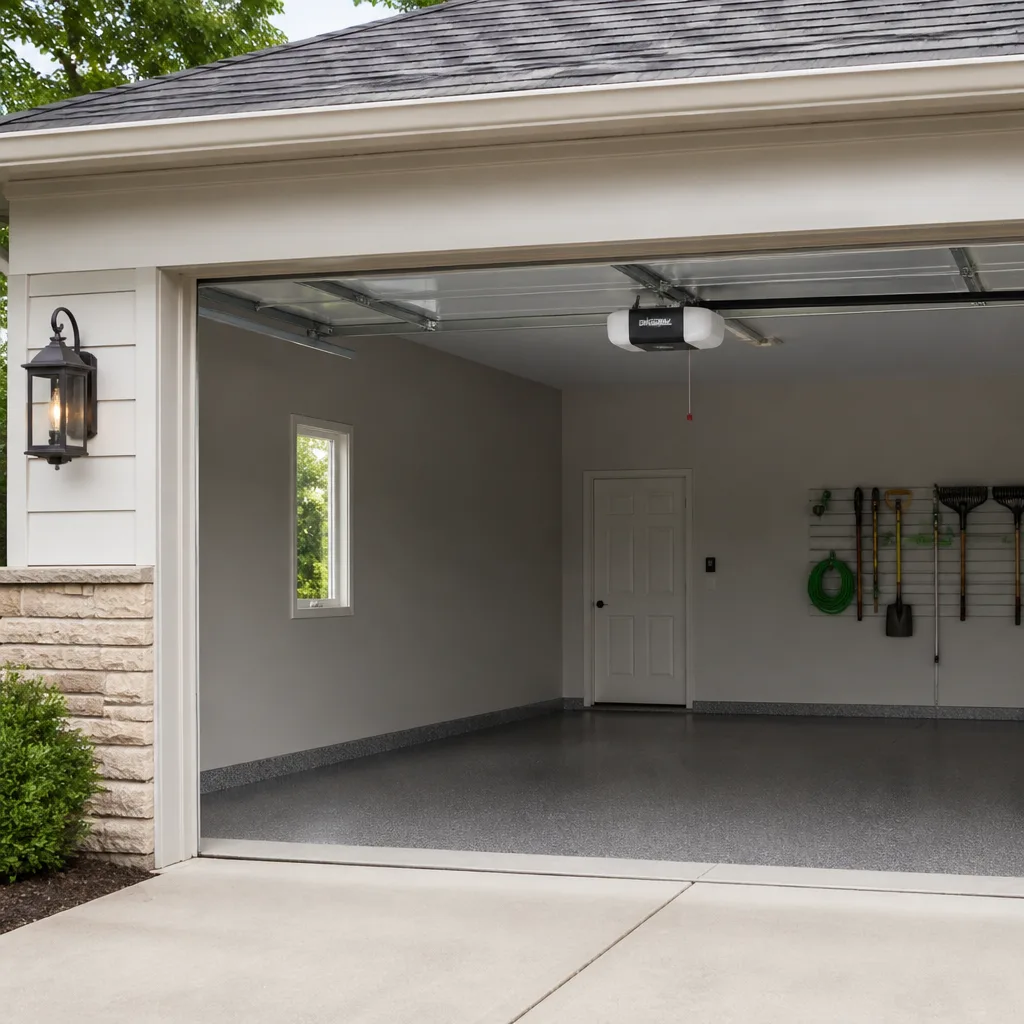 Chamberlain openers
Full 25-point door and opener safety check with every visit - springs, cables, rollers, tracks, and your LiftMaster or Chamberlain opener included
You get a price before we start. It does not change when the pro arrives.
Get your free estimateGarage Door Warning Signs: An East Harlem Homeowner’s Reference Guide
A garage door that “sounds a little different” is not a personality quirk. Grinding, popping, and lag each point to a different failing component, and telling them apart is the difference between a small targeted repair and a full emergency replacement. Most doors that fail badly gave weeks or months of warnings first. The trouble is that nobody hands you a chart of which sounds matter and which are harmless. East Harlem makes it harder, because street noise and building vibration mask the early signals. This guide maps symptoms to components so you can describe the problem precisely and stop guessing. You’ll learn what each sound means, which visual signs to act on, and how fast to move.
Quick Answer
In East Harlem, treat any bang or snapping from above the door, a door that hangs crooked or drops fast, and anything you can see fraying as stop-using-it-now. Grinding, squealing, or a door that lags but still moves is a call-this-week sign. Light clicking at the opener is usually a monitor-for-now sign. When in doubt, describe the sound and the movement to a specialist before you cycle the door again.
Styles & brands we work with
- Raised-panel steel
- Carriage house
- Modern flush
- Full-view glass
- LiftMaster openers
- Chamberlain openers
Table of Contents
- What Do the Sounds Give Away?
- Sound-to-Component Mapping
- Visual Warning Signs and What They Mean
- Response Time Guide: Stop, Book, or Monitor
- How East Harlem’s Urban Noise Masks Warning Sounds
- garage door opener repair vs. Door System Warnings
- Seasonal Warning Signs in East Harlem
What Do the Sounds Give Away?
A garage door is a balanced system under heavy tension, so every unusual sound comes from something specific giving. If you learn to listen by component, you can describe the problem in one sentence instead of a vague “it’s making a noise.” That single sentence shortens the diagnosis and often cuts the cost of the visit, because the technician arrives prepared. Here’s the mechanical story behind the four sounds homeowners mention most.
- Grinding: metal-on-metal friction, usually from dry or worn rollers, a bent track, or a torsion shaft with spent bearings. Grinding escalates – it wears the moving parts faster every cycle.
- Squealing or high-pitched whine: almost always a failing roller bearing or a torsion tube that needs attention. The pitch tells a technician whether it’s above the door or at the opener.
- Popping: can be a single broken torsion spring’s turns letting go, or a cable slipping off a drum. A single loud pop followed by the door refusing to lift is a stop-and-call sign.
- Clicking: often the opener relay, a safety-sensor misalignment, or a loose bracket. Clicking that repeats without movement points to the opener, not the door.
In our experience, homeowners who can name the sound and where it comes from on the door save time and get the right part on the first visit. Grinding at the top of the travel reads very differently from grinding at the bottom, and saying which one you hear matters.
Sound-to-Component Mapping
Here’s the reference table we use when a homeowner describes a symptom over the phone. Match your sound to the likely component, then note whether it happens on opening, on closing, or both. That detail narrows the diagnosis faster than anything else you can tell us.
- Grinding on opening: rollers, hinges, or a worn torsion shaft bearing.
- Grinding on closing: bent track, misaligned roller, or a door out of balance.
- Popping near the top corners: torsion spring failing – treat as urgent.
- Snapping or a single boom: broken spring or a cable off its drum – stop using the door.
- Clicking at the opener housing: opener relay or gear; the door itself may be fine.
- Rattling underneath: loose bottom bracket or roller, sometimes a loose panel fastener.
Run the door a single cycle from the wall button and listen with the overhead door closed behind you, if your building allows it. The same sound can come from the door, the opener, or a trolley that needs adjustment, and pinpointing it saves the guesswork. When the sound matches more than one item on the list, that’s your cue to have a technician look, because the fix could be a $120 roller swap or a spring repair, and the sound alone won’t be reliable.
Visual Warning Signs and What They Mean
Sounds get your attention, but some of the most important warnings are things you can see. A garage door announces trouble visually long before it fails, and a few minutes of inspection each month lets you catch a small fix before it becomes a big one. Walk around the inside of the door with a flashlight and check these four points.
- Gaps in a closed door: light showing through at one corner means the door is out of balance or a panel has shifted. Daylight along the bottom on one side only is a track or roller problem.
- Visible cable fraying: any frayed strand, kink, or slack cable is a stop sign. Cables store enormous tension and are not a homeowner repair.
- Rust streaks on the track: rust marks where a roller rides signal friction and a roller that’s dragging instead of rolling. Clean marks mean wear; rust streaks mean metal grinding metal.
- Uneven bottom clearance: a door that seals on one side and leaves a gap on the other is usually out of adjustment, not misaligned by accident.
If you see a frayed cable or a broken spring, do not cycle the door again to “confirm it.” High-tension parts can release without warning, and this is exactly the work we leave to trained hands. Call a specialist and describe what you saw; we’ve handled enough of these in East Harlem to talk you through safe next steps on the phone.
Response Time Guide: Stop, Book, or Monitor
Not every warning is an emergency, but the ones that are don’t forgive delay. Sorting symptoms into three buckets – stop now, book this week, monitor – keeps you from either overreacting to cosmetic noise or ignoring a real failure in progress. Use this guide the moment something sounds off.
Stop using the door immediately:
- Any bang, pop, or snap followed by a door that won’t lift or drops unevenly
- A door hanging crooked or one side sagging
- Visible frayed, kinked, or slack cables
- A door that reverses or free-falls partway
Book a service call this week:
- New grinding or squealing that appeared recently
- A door that lags on opening but completes the cycle
- An opener that clicks but doesn’t move the door
- A gap or uneven bottom seal you can see clearly
Monitor for now:
- Occasional light clicking with no change in movement
- A single squeak that appears in cold weather and fades as the day warms
- Minor rattling that stops after a cycle
If any “monitor” sign starts repeating or gets louder, it graduates to the book-this-week bucket. Predictable noise during heating season and again in the first warm weeks is normal, but noise that comes and goes on every cycle is not.
How East Harlem’s Urban Noise Masks Warning Sounds
One thing makes garage door problems harder to catch in East Harlem than in a suburban driveway: noise. Between traffic on the avenues, delivery trucks, and the constant hum of a dense block, a grinding roller or a straining torsion shaft disappears into the background. A homeowner might mistake a failing component for the building’s mechanicals or the street, and by the time the door fails, the warning was there for weeks.
Building vibration is the other culprit. In apartment buildings and attached brownstones, the garage door shares structure with the rest of the building, so a pop or grind gets absorbed into the walls and reads as “the building settling.” The fix is to listen deliberately: close the interior door, stand beside the garage door, and run it one cycle without other noise if you can. What you hear in that quiet minute tells you more than a week of passing noise. And because the door is often the same system the neighbors also rely on, a warning you notice is worth mentioning to a building super or property manager – one failing door in a shared lineup can affect everyone’s access.
We work in tight East Harlem spaces where a technician can’t always hear the door from the street, so clear details help: which sound, where on the door, and whether it happens on opening or closing. That’s the information a professional actually uses to diagnose.
Opener Repair vs. Door System Warnings: Which Is It?
A slow or reluctant door is the single most misdiagnosed symptom we hear about. Homeowners often assume the opener is going because it’s the part with the motor and the light. But a slow door can come from the opener motor, a weakening spring, or friction in the track, and treating the wrong one wastes money and leaves the real problem to get worse. Here’s how to tell the difference before you call.
- If the opener runs but the door barely moves or stalls: suspect the door is too heavy for it – a sign of a failing spring or high track friction, not a dead opener.
- If the opener is silent when you press the button: check the wall switch, the safety sensors, and the circuit first – this is usually electrical or sensor, not the door.
- If the door starts then reverses: likely a sensor obstruction, an opener limit setting, or a door obstruction on the track.
- If the opener’s light blinks a code pattern: that’s the motor complaining, and it’s an opener repair, not a door repair.
We work on the opener brands most East Harlem homes already have, including Chamberlain and Genie, plus the doors they lift – Clopay and Amarr among them – so the diagnosis covers the whole system instead of half of it. A technician who knows both the motor and the door doesn’t guess whether it’s the spring or the gear; they test. That’s the reason to call a specialist rather than a generalist handyman for this one.
Seasonal Warning Signs in East Harlem
East Harlem’s climate gives the door two stress windows a year. Cold snaps shrink and stiffen lubricant and metal, so a door that was smooth in October starts grinding in January. The first warm, humid weeks bring swelling in the wood and track hardware and a wave of new squeals. Both are normal transitions – up to a point – and knowing the seasonal pattern helps you judge which new sounds are wear and which are weather.
What’s seasonal: a single squeal on the first cold morning that fades as you cycle it, or a slightly heavier feel in winter that rebounds in spring. What’s not: grinding that stays after several cycles, a pop you’ve never heard before, or a door that suddenly lags in warm weather when it was fine in the cold. That last shift often points to a spring that’s weakening or a track that’s shifting, and it deserves attention.
Giving a door one careful listen at the season change – when you switch over clothing or winterize the building – is a low-effort habit that catches fading components while the repair is still small. Our technicians handle these checks for East Harlem homes all year, and the goal is always the same: identify the specific component before it fails.
Common Mistakes to Avoid
- Ignoring a single loud pop. One pop can mean a spring just let go; don’t cycle the door to check – that can send a cable loose. Call and describe it.
- Assuming the door is fine because it still opens. A door that opens with grinding is on borrowed time. The grinding wears parts faster every cycle.
- Oiling the tracks. Lubricant on the tracks attracts grit and makes the rollers slide instead of roll. The tracks should stay clean; the moving parts get the lubricant.
- Treating every click as a door problem. A click at the opener housing is often the opener, not the door, and misdiagnosing it leads to the wrong fix.
- Dismissing noise as building vibration. In East Harlem it’s easy to blame the environment. Listen in a quiet moment before you write off a repeating grind.
- Letting a slow door ride. A lagging door is a story about a spring, a track, or the opener – not a quirk. Find out which before it stops moving.
- Trying to adjust a torsion spring or cable yourself. These parts hold dangerous tension. No homeowner should attempt them; the safe move is a trained technician.
See the difference
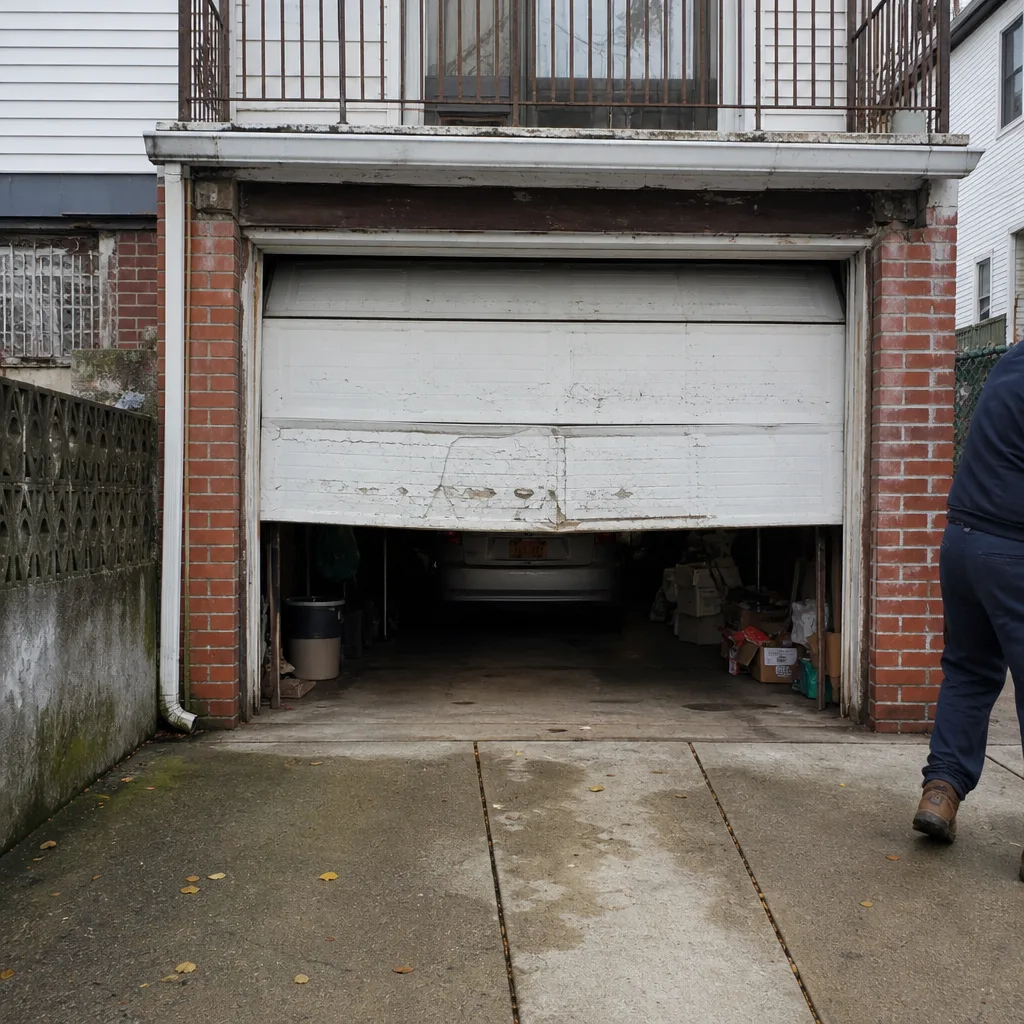 Before
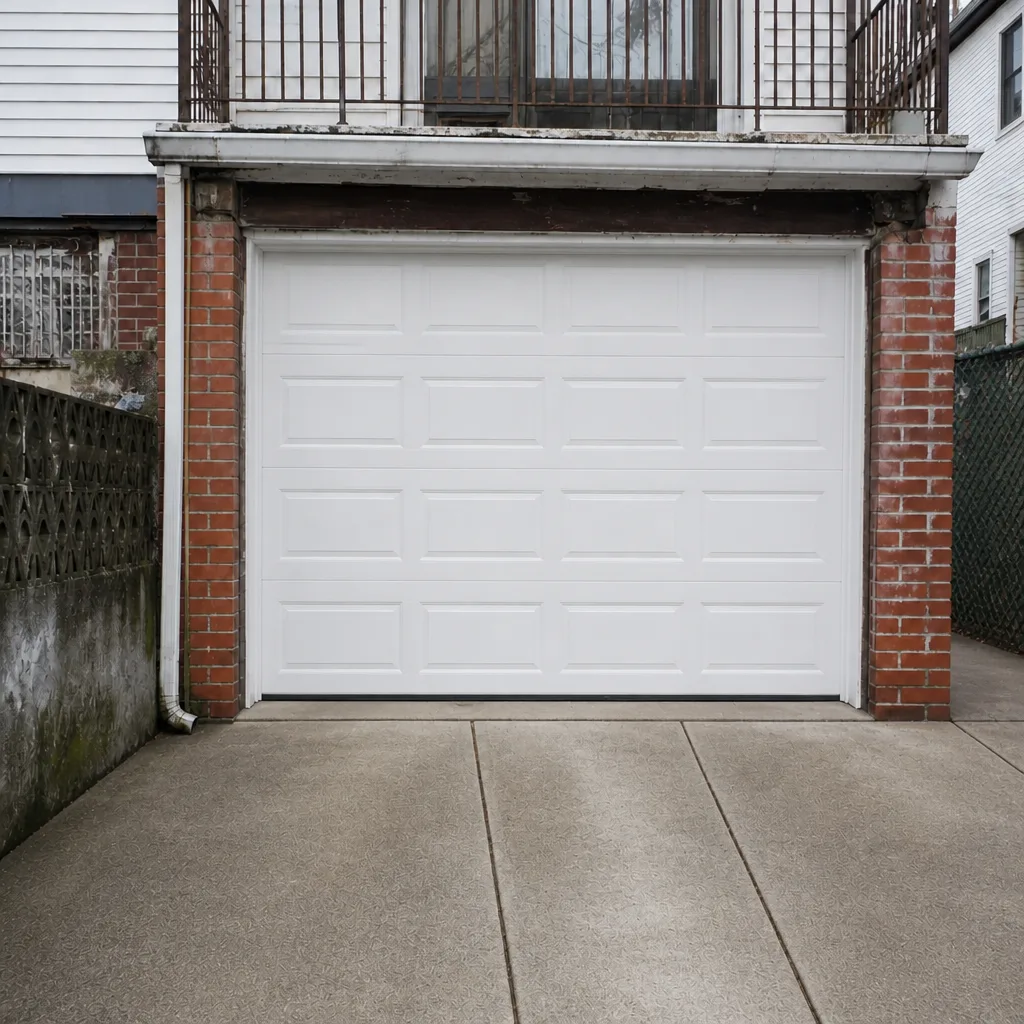 After
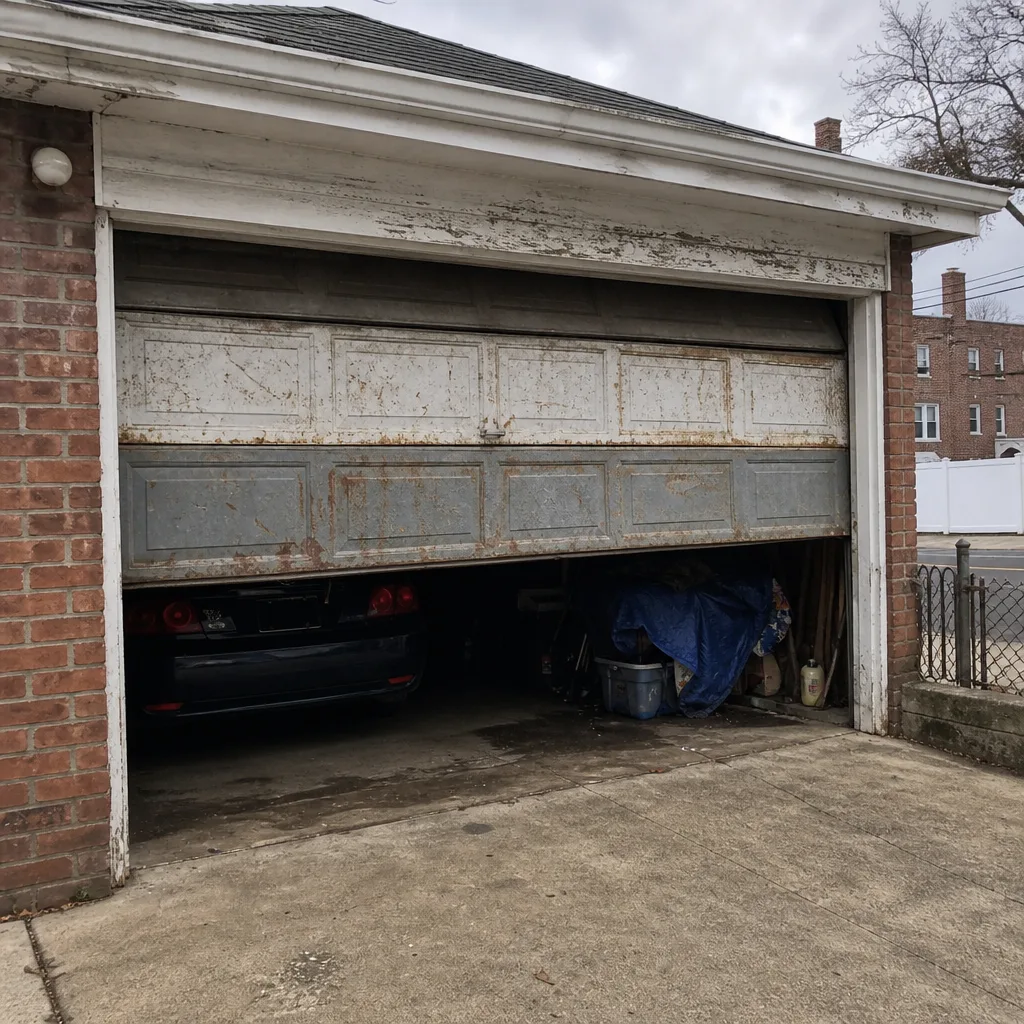 Before
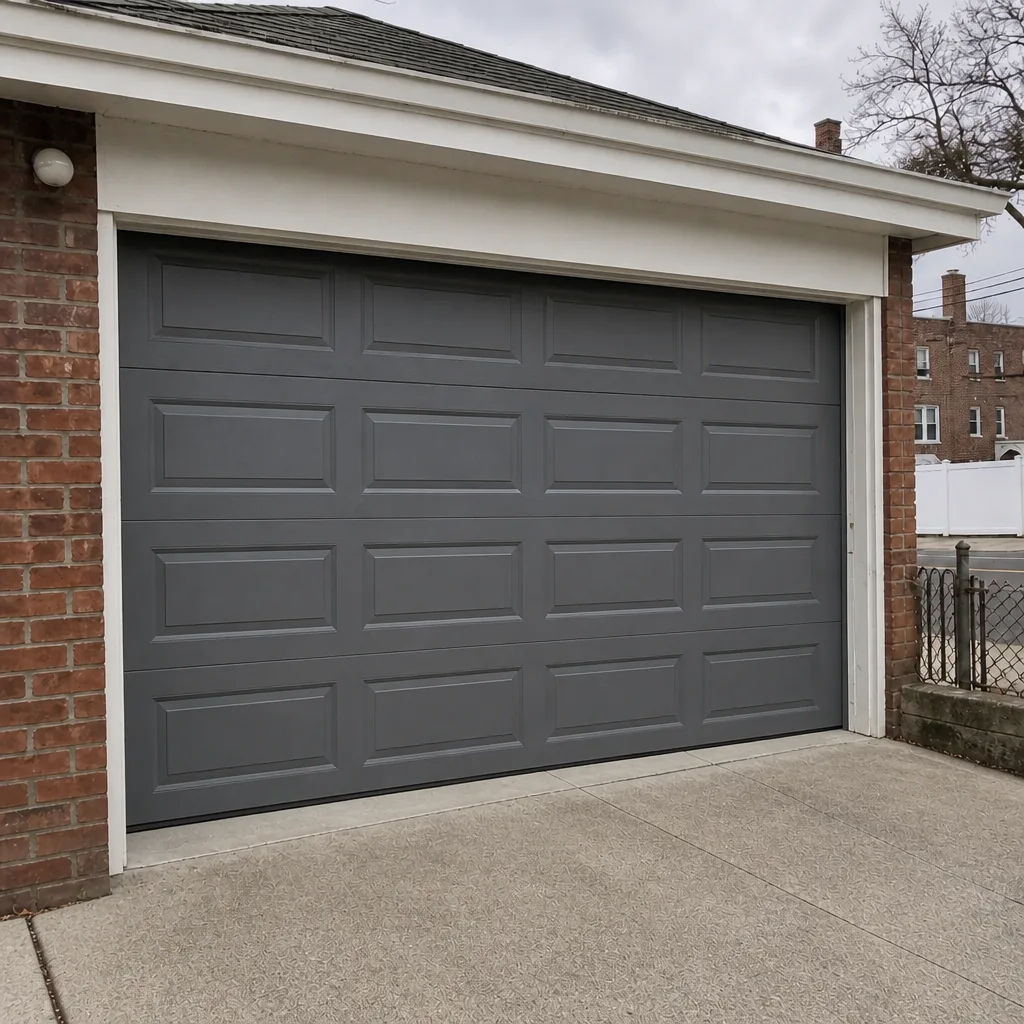 After
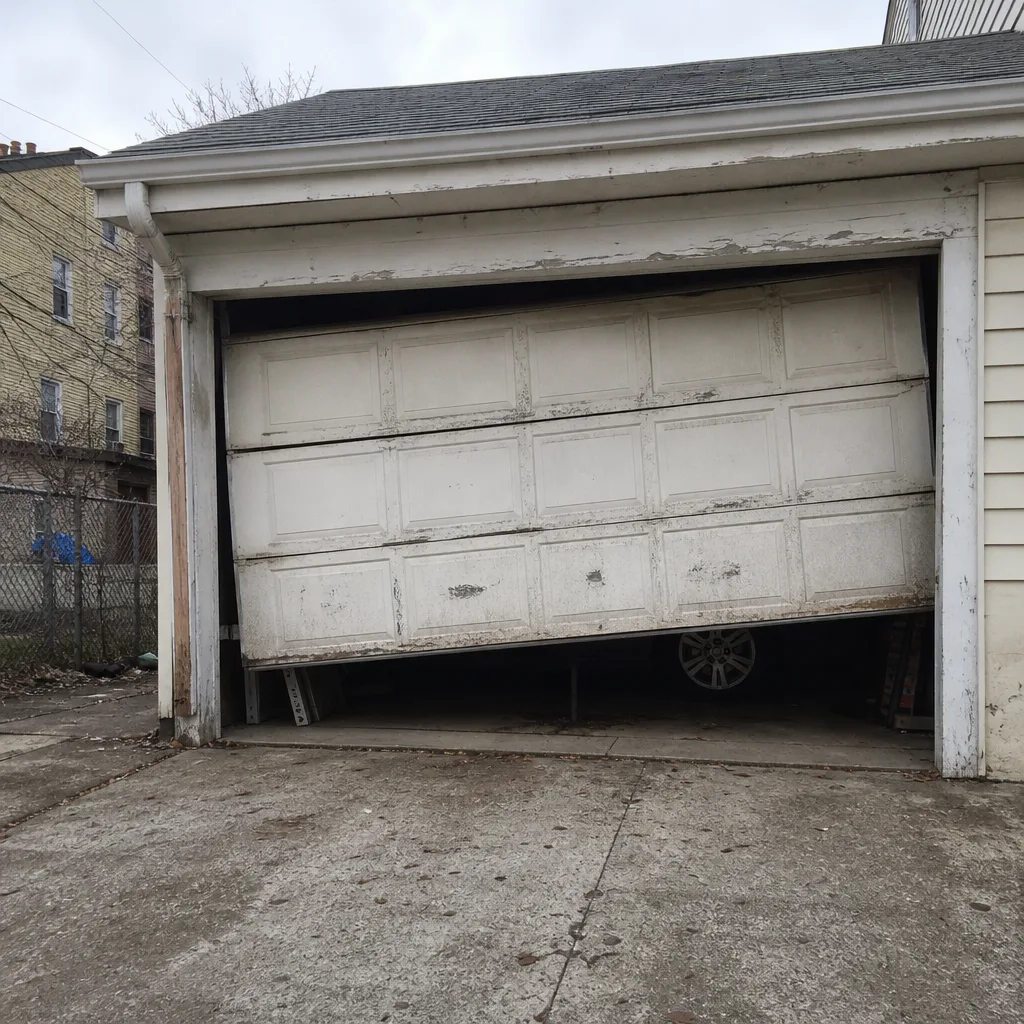 Before
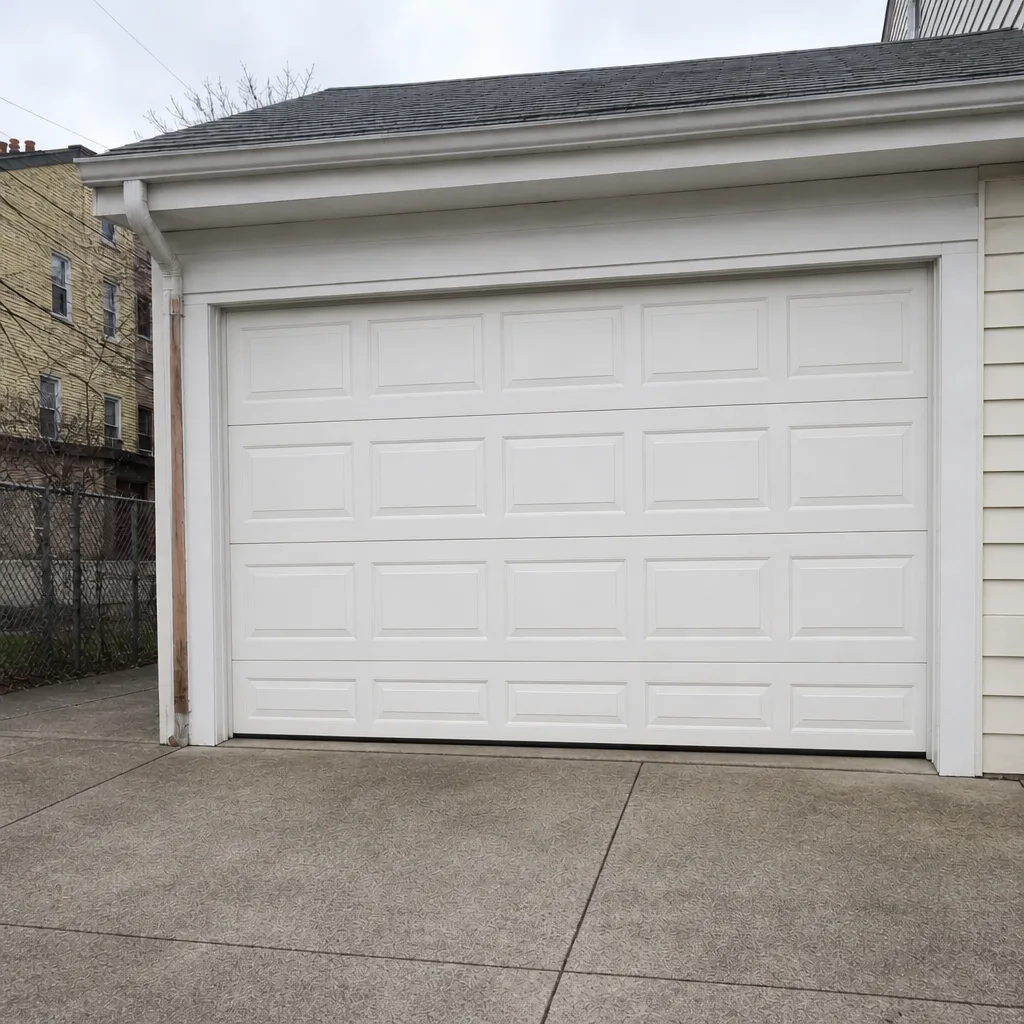 After
When to Call a Professional
Call a professional when you hear a bang or snap, see fraying or slack in a cable, notice a door hanging unevenly, or have a door that reverses or free-falls. This kind of garage door repair isn’t a homeowner project – those components are under heavy tension and can cause serious injury. Get us on the line if your opener runs but doesn’t move the door, or if the door works but grinds, lags, or seals unevenly; we can tell you whether it’s a spring, a track, or the motor. Our technicians have up to 12 years of experience and work on the brands you already own. Garage Door Repair East Harlem offers free estimates in East Harlem – call (866) 401-4528. We answer 24/7. Fast dispatch from 7am to 7pm, Sunday through Friday.
Frequently Asked Questions
The most serious signs are a bang or snapping noise from the springs, a door that hangs crooked or drops fast, visible frayed cables, and a door that reverses partway. Any of these means stop using the door and call a specialist right away. A pop from the top corners is a red flag for a failing torsion spring, which is high-tension work best left to a trained technician. Call (866) 401-4528. We answer 24/7. Fast dispatch from 7am to 7pm, Sunday through Friday.
If the opener runs but the door stalls or lags, the problem is likely the spring or track friction; if the opener is silent when you press the button, suspect the opener, sensors, or power. A blinking light code on the opener points to the motor itself. We work on garage door opener repair for Chamberlain and Genie systems, so we can test both the motor and the door together. Not sure which you have? Call (866) 401-4528 for a free estimate.
A single squeal on the first cold morning is normal; grinding that keeps going after a cycle is not. In East Harlem, winter stiffens lubricant and metal, so a door that was quiet in autumn can start to grind – but persistent grinding means a worn roller or bearing. We’d want to see it. Call (866) 401-4528 and we’ll talk it through.
No. Torsion and extension springs hold dangerous tension and can release without warning, so a homeowner should never adjust or replace them. The safe move is to stop using the door and have a trained technician handle the spring work. We’ve seen enough spring failures in East Harlem to know this isn’t a do-it-yourself job. Call (866) 401-4528 for a free estimate.
Give it a quick visual and one careful listen each month, and again at each seasonal change in East Harlem. Look for gaps in the closed door, frayed cables, rust streaks on the track, and uneven bottom clearance. Listening in a quiet moment catches the masking problem that street noise creates. Book garage door installation or repair when the same warning keeps returning. Call (866) 401-4528 to schedule.
Clicking at the opener housing usually means the opener relay or gear, not the door itself. If the door still lifts smoothly, monitor it; if the clicking repeats without the door moving, it’s an opener repair and worth a call. We’ve worked on enough Chamberlain and Genie openers in East Harlem to recognize the pattern fast. Call (866) 401-4528 for a free estimate on the repair.
The Bottom Line
Garage door failure almost never comes without warning. The sounds and visual clues in this guide map specific symptoms to specific components – grinding to rollers or bearings, popping to springs, clicking to the opener, a slow door to a spring, track, or motor. In East Harlem, city noise and building vibration hide those signals, so listen in a quiet moment on purpose. Stop the door for a snap, a crooked hang, or a frayed cable. Book this week for grinding, lag, or a visible gap. And when you’re unsure, describe what you hear and let a specialist pinpoint the component. If you want a professional read on your door, we handle Garage Door Repair East Harlem from springs and cables to panels and full doors.
Call (866) 401-4528 today for a free estimate. We answer 24/7. Fast dispatch from 7am to 7pm, Sunday through Friday. The price is quoted and agreed before any work starts, so there are no surprises. Whether you need repair or a whole new door, we’ll tell you exactly what we found and what it takes to fix it.
Written by the team at Garage Door Repair East Harlem.