
Last updated November 21, 2026
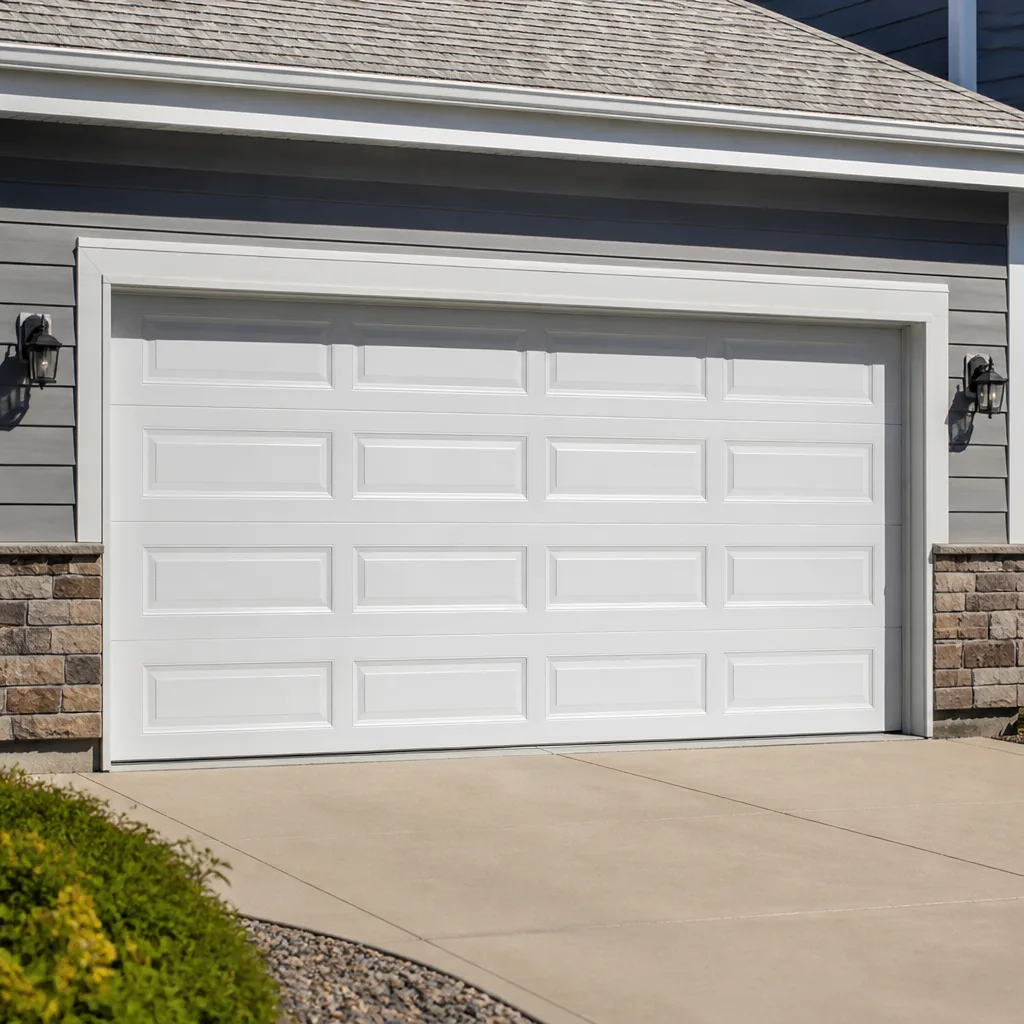 Raised-panel steel
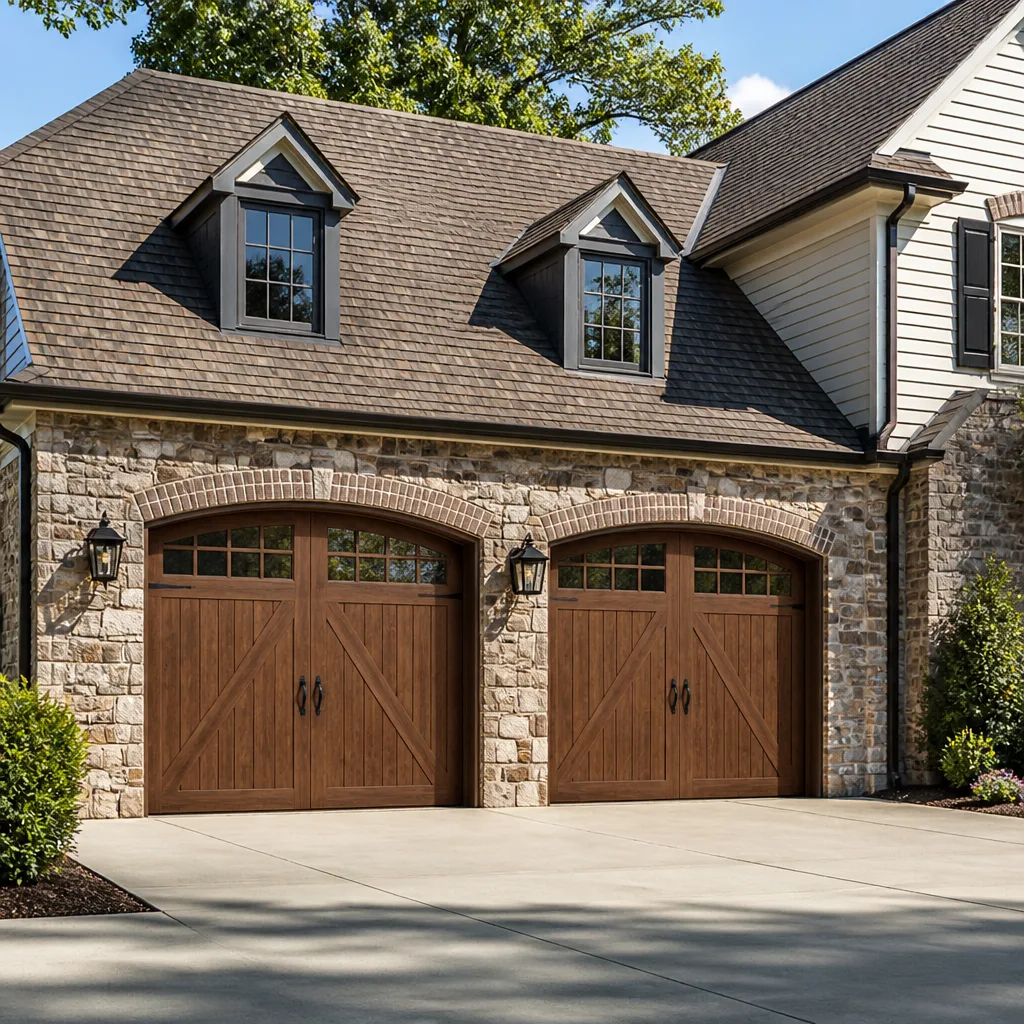 Carriage house
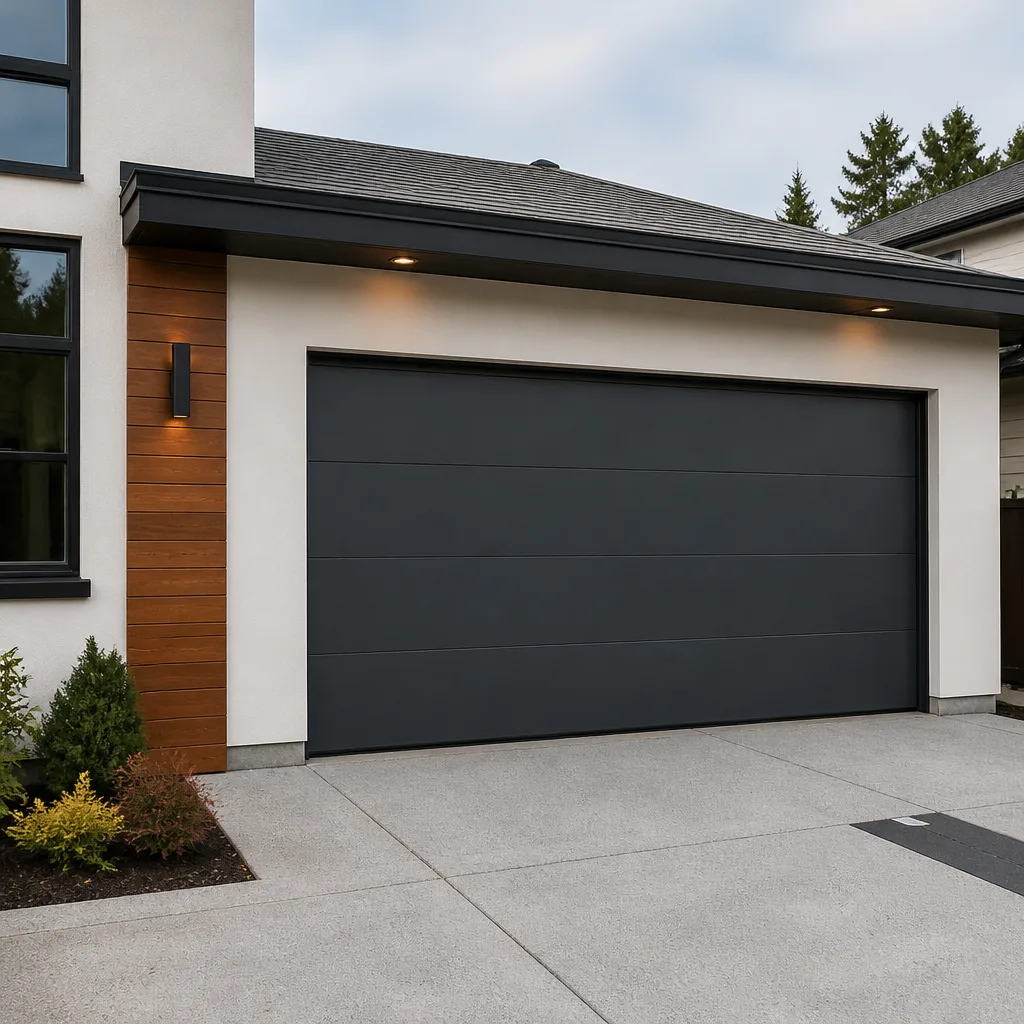 Modern flush
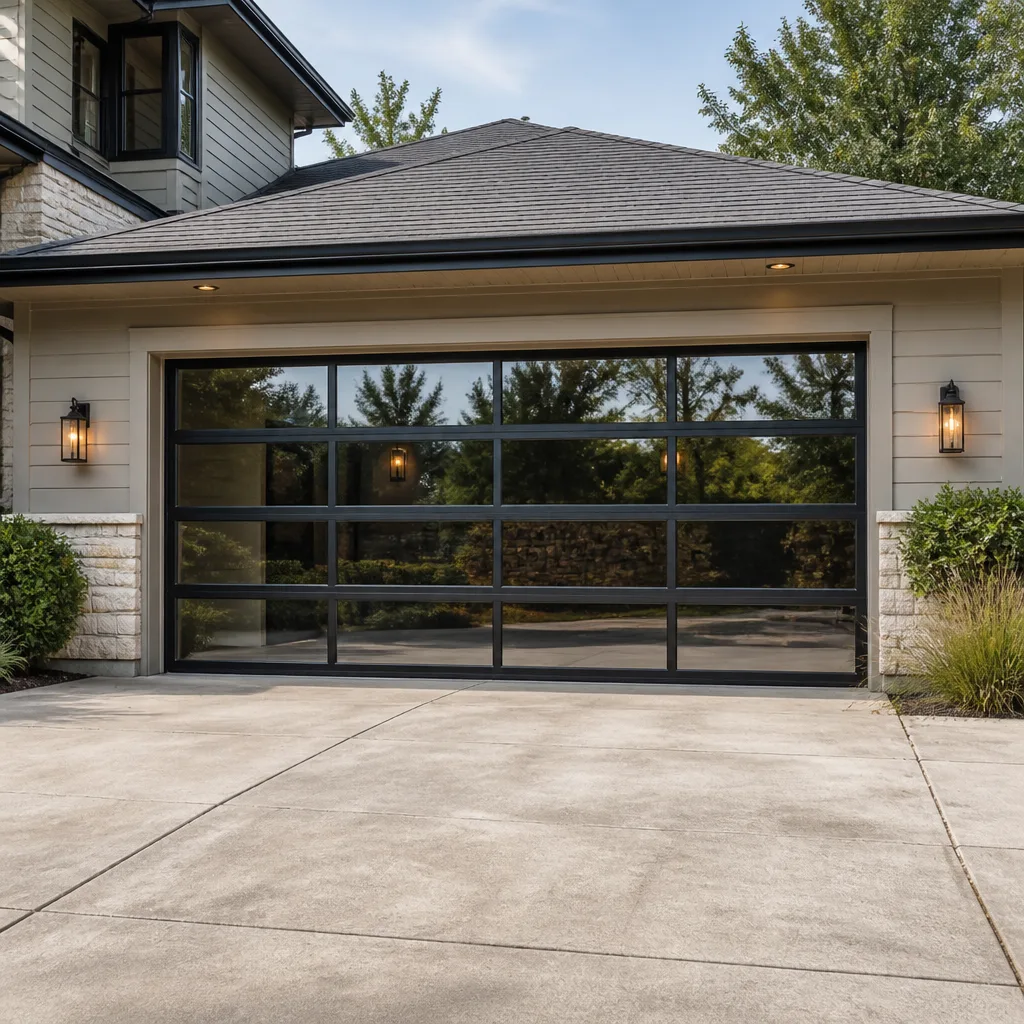 Full-view glass
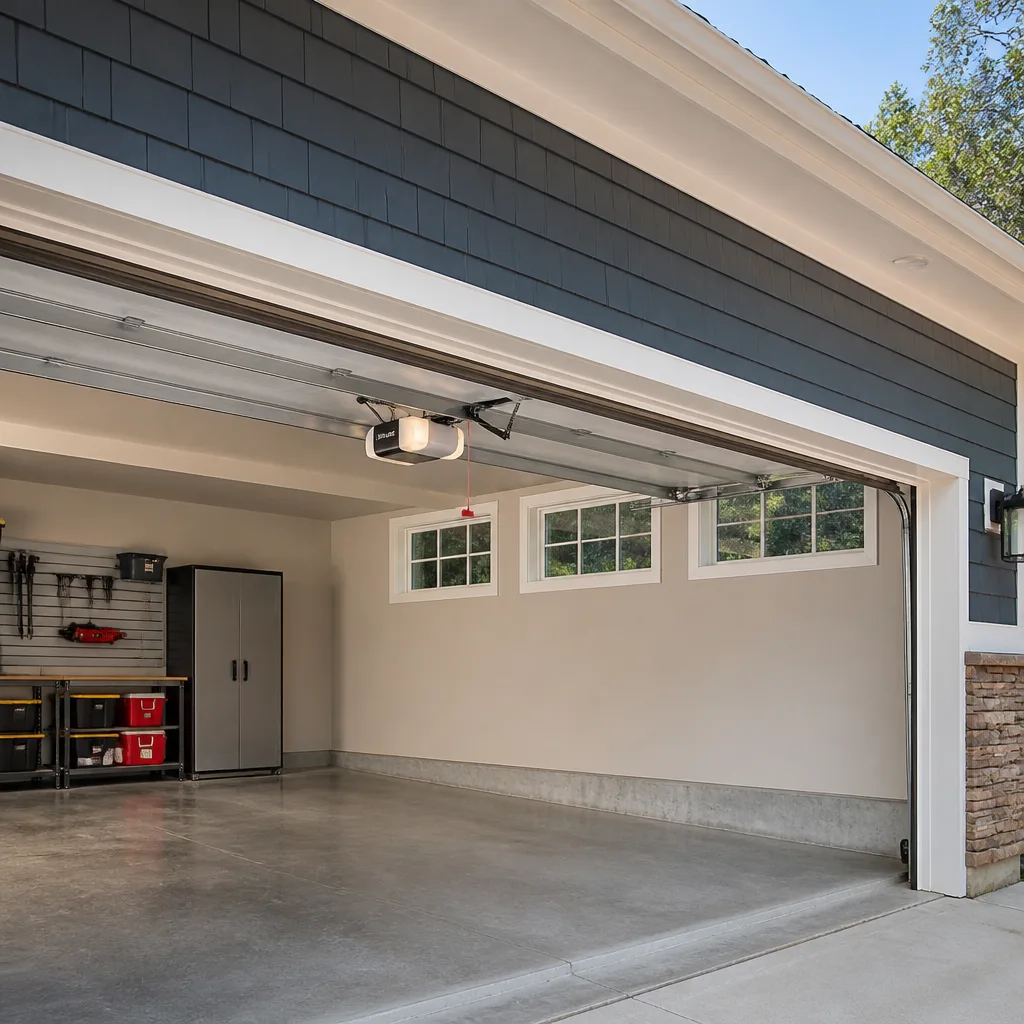 LiftMaster openers
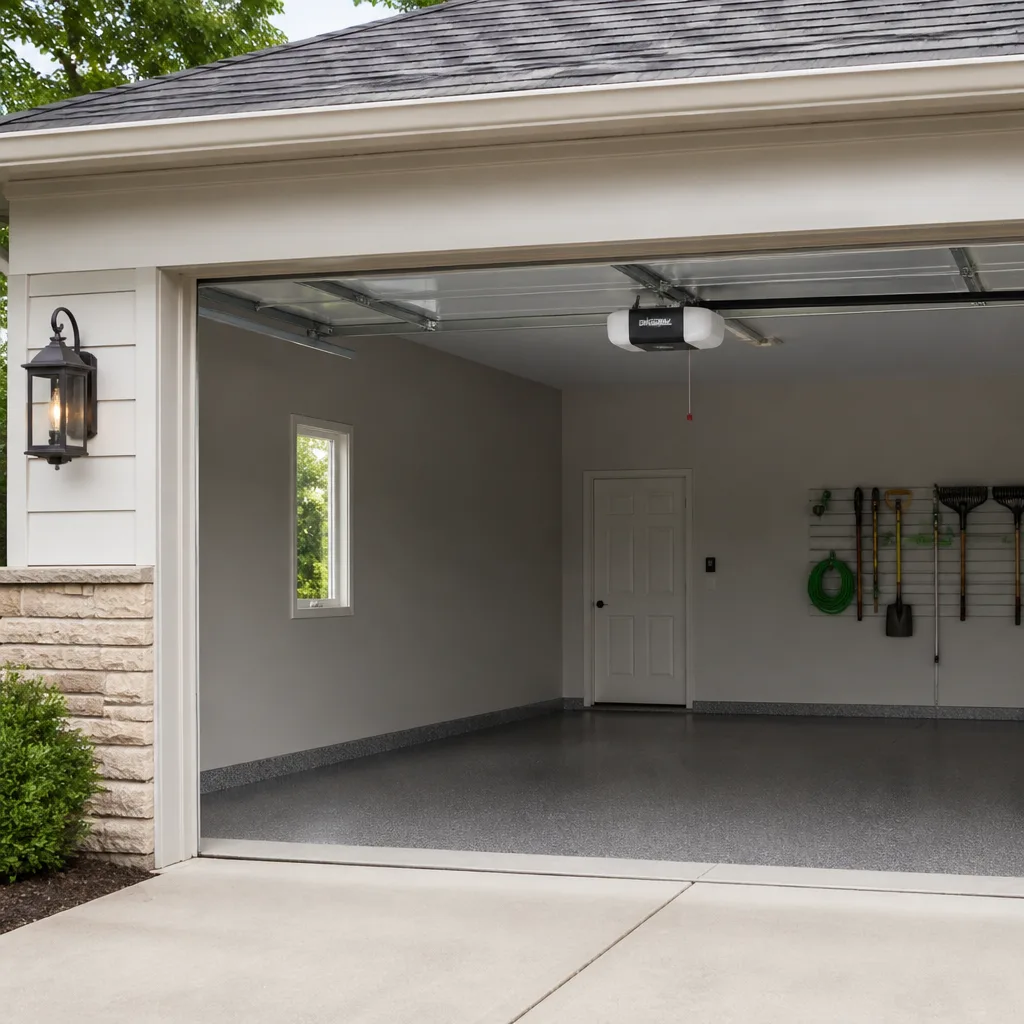 Chamberlain openers
Full 25-point door and opener safety check with every visit - springs, cables, rollers, tracks, and your LiftMaster or Chamberlain opener included
You get a price before we start. It does not change when the pro arrives.
Get your free estimateGarage Door Repair Troubleshooting in East Harlem: Common Problems and How to Fix Them
A snapped spring and a dead opener look identical from the inside of a stuck garage. Both leave you with a door that won’t move, both are loud, and both make you reach for your phone. But one is a spring problem and one is a power or logic problem, and the two demand completely different repairs. Misreading the symptom is the most expensive mistake East Harlem homeowners make, because it leads to the wrong part, the wrong expectation, and occasionally the wrong idea that you can force the door up by hand. This guide maps symptoms to root causes using nothing but what you can see and hear, no tools required, and tells you plainly which fixes are safe to attempt and which involve stored energy you should never touch.
Quick Answer
Most garage door failures in East Harlem come down to five root causes: a broken spring, a snapped cable, a misaligned track, a failed opener, or a sensor and safety-reverse fault. You can usually identify which one you’re facing by watching how the door behaves and listening to what it does before it stops, and that identification matters because spring and cable failures involve stored mechanical tension that only a trained technician should handle, while sensor and opener resets are genuinely homeowner-safe.
Styles & brands we work with
- Raised-panel steel
- Carriage house
- Modern flush
- Full-view glass
- LiftMaster openers
- Chamberlain openers
Table of Contents
- Symptom-to-Solution Reference Table
- How to Tell a Spring Failure From an Opener Failure
- Cable Snaps and What They Look Like
- Track Misalignment and Roller Problems
- The Manual Release Cord: How and When to Use It
- Why East Harlem Garages Fail Differently
- DIY-Safe Versus Professional-Only Fixes
- What Garage Door Repair Costs in East Harlem
Symptom-to-Solution Reference Table
The fastest way to understand a garage door failure is to match what the door is doing to the parts that make it move. Below is the reference we use when a homeowner describes a problem over the phone. Read the “what you notice” column first, then the likely cause, then the urgency column to know whether you’re looking at a same-day emergency or a repair you can schedule.
- Loud bang, door won’t lift, opener runs but nothing moves: broken torsion or extension spring. Same-day emergency. Do not force it.
- Door lifts a few inches then stops, or hangs crooked: snapped or slack cable on one side. Same-day emergency, and stay clear of the door.
- Grinding, scraping, or the door rubbing one side of the frame: track misalignment or a worn roller. Schedulable in most cases, same-day if the door is stuck.
- Opener hums or clicks but the door doesn’t move; light flashes: opener motor, gear, or logic board fault. Schedulable, same-day if you’re locked in.
- Door goes down then reverses immediately: safety sensor obstruction or misalignment. Homeowner-safe to check.
- Door feels heavy going up by hand (with the opener disconnected): spring tension loss. Professional only.
- Squealing or squeaking during travel: dry hinges and rollers. Homeowner-safe lubrication.
- Door sags in the middle or the panels look bent: structural panel or section damage, often after a heavy impact. Schedulable.
How to Tell a Spring Failure From an Opener Failure
This is the single most useful diagnosis you can make, and you can usually make it without touching anything. Stand back from the door, look up, and check the springs above the door opening. If you have a torsion setup, you’ll see a horizontal shaft with one or two coiled springs mounted on it. Extension springs, more common on older doors, run parallel to the horizontal tracks. A broken spring shows a visible gap in the coil. Sometimes it’s an obvious two-inch separation. Sometimes it’s a hairline break you’d miss from the wrong angle.
Now press the wall button or the remote and listen. If you hear the opener motor running, the light comes on, and the trolley moves along the rail but the door itself does not move, the opener is fine and the mechanical side has failed. That points to a spring. If the opener hums for a second and stops, or clicks repeatedly with nothing moving at all, the opener itself is the likely fault. If the door lifts a few inches and stops dead with the opener still trying, you have a tension problem on the spring or cable side, and the opener is doing what it’s supposed to by giving up.
One more distinction matters in East Harlem. A door that opens fine in the morning but won’t budge in the afternoon often points to a spring that finally let go after weeks of thinning, rather than an opener that failed outright. Openers almost never fail in stages. Springs do. They weaken, lose tension, and then break, and the door often feels heavier for a while before it stops working at all.
Safety note: If a spring is broken, do not lift the door by hand, do not pull the manual release cord, and do not stand under the door. The counterbalance is gone, the door’s full weight is on the opener rail and cables, and either can fail under that load. Call a trained technician.
Cable Snaps and What They Look Like
Garage door cables are the steel lines that run from the bottom bracket of the door, up over the drum, and back to the shaft. They work with the springs to keep the door balanced and level. When one snaps, the door hangs crooked because one side has lost its lift and the other side hasn’t. You’ll see the door sitting at an angle in the opening. You may see a stray length of cable hanging loose near the bottom corner. And in most cases you’ll hear a sharp snap that sounds different from a spring break, which is more of a bang.
Two things make cable failures urgent. First, the door’s weight is now carried unevenly, and a door in that condition can drop or twist its way off the track. Second, a snapped cable can whip when it fails, so anything near the door at that moment is at risk. If a cable lets go, stop using the opener, keep people and pets out of the garage, and call for the same-day repair. This is a job for a proper garage door garage door repair service, because cables carry the same tension the springs do, and both must be replaced and retensioned together as a matched system.
In East Harlem’s older buildings, cables age on a different curve than in newer construction. Carriage houses and converted garages often have original hardware that’s outlived its intended service life, so a cable that looks fine can already be at the end of its useful stretch. When we’re on a job and find one cable failing, we inspect the other, the drums, and the bottom brackets before we put the door back into service. A second cable failure three weeks later is avoidable.
Track Misalignment and Roller Problems
Track problems announce themselves more quietly than a spring or cable failure. A door that scrapes, grinds, or rubs one side of the frame as it travels is usually riding a track that’s out of alignment, and a track goes out of alignment for a few reasons. A car nudged the vertical track. A building shift pulled it out of square. A heavy wind event bent a section and pushed the rollers against the rail. The door still moves, so most people live with it, but the grinding is metal wearing on metal, and it eventually turns into a door that stops entirely.
Here’s what you can safely check:
- Look down the vertical tracks from the front of the garage. They should look straight and parallel. A bend is visible.
- Check the rollers on each hinge. A worn roller will be loose in its holder or flat-spotted. A missing roller leaves a hinge riding the track directly.
- Watch the door travel slowly and see if one side gets ahead of the other. Uneven travel means the track or a roller is off.
- Look for fresh gaps between the track and the frame uprights. A track that’s come loose from its brackets will have visible play.
A slightly loose bracket can sometimes be tightened safely, but a bent or misaligned track needs to be realigned by a technician with the proper tools and an eye for whether the panels have started to warp. A door that’s hit a track problem for a while often needs a panel check alongside the track fix. This is where a full-spectrum garage door repair East Harlem service earns its keep, because the track, the panels, and the rollers are one system and the fix has to account for all three.
The Manual Release Cord: How and When to Use It
Every overhead garage door has a manual release cord, usually a red handle hanging from the trolley on the opener rail. Pulling it disconnects the door from the opener so you can lift the door by hand. It’s there for power outages and for openers that need to be bypassed during service. Homeowners frequently reach for it when the door is stuck, and that’s where problems start, because a manual release is only safe if the door’s springs are still doing their job.
Here’s the procedure when the door is mechanically sound but the power is out or the opener has failed:
- Make sure no one is standing under or near the door.
- Pull the release cord straight down until it clicks. The trolley should detach from the door arm.
- Lift the door slowly by hand from the center of the bottom section, keeping your hands clear of the hinges.
- Let go at about waist height. A door with working springs will stay roughly where you leave it. A door that crashes down is telling you the springs have failed.
- Reconnect the trolley before using the opener again. Pull the cord until the trolley re-engages, or move the door until the arm slides back into the trolley’s slot.
When NOT to use it: if you’ve seen a broken spring, if the door is hanging crooked, if you’ve heard a snap or a bang, or if the door already feels heavy or falls fast, do not pull the release. With a broken spring, the door is being held only by the opener and the cables, and releasing it transfers the door’s full weight to your hands. A double-wide wooden door can weigh hundreds of pounds. That’s a hand and back injury waiting to happen, and we’ve seen exactly that scenario more than once in East Harlem’s older two-car carriage-house conversions.
Why East Harlem Garages Fail Differently
East Harlem has a housing mix you won’t find in most of the country. There are townhouses and walkups with small attached garages carved out of the ground floor. There are the converted carriage houses near the older stretches of the neighborhood, some of them now used as parking and some as workspace. And there are newer multi-unit buildings with shared parking underneath. Each of these produces a different failure pattern, and it’s not the same as a suburban two-car garage with a wide, light, modern steel door.
The most common thread in East Harlem is tight framing around older doors. When a door has to fit into an opening built for a smaller, heavier wood door decades ago, the clearances are tight, and that means a small track misalignment can become a jam fairly quickly. The rollers ride against a rail that has less room for error. Weatherstripping gets compressed. Panels warp slowly against the frame. Owners often describe it as “the door has always been stiff.” That stiffness is a symptom, not a personality.
The other thread is weight. Older wood doors are heavy. Modern steel doors on the same opener can be lighter, but if the spring was sized for the original door and a lighter or heavier replacement panel was installed without re-balancing, the opener is doing work it shouldn’t be doing. That shows up as strain on the opener motor, a door that reverses halfway down, or an opener that fails earlier than it should. If you’re working through whether your current door is worth repairing or replacing, our guide to garage door installation lays out the sizing and clearance questions that come up most often in East Harlem buildings.
Cooling and heating cycles matter too. East Harlem garages that are attached but unheated go through real temperature swings. Metal expands and contracts, and hardware loosens over time. Lube dries out faster in cold garages and hardware squeaks louder. A door that lived a quiet life for years can start making noise the first cold snap after a mild fall. It’s not a mystery, it’s maintenance debt coming due.
DIY-Safe Versus Professional-Only Fixes
We tell homeowners plainly which jobs are safe to handle and which aren’t. It saves everyone time, and it saves a few hands. The dividing line is stored mechanical energy. Springs and cables are under tension at all times, even when the door is fully closed, even when the opener is unplugged, even when the door looks calm. The moment you loosen a spring fitting or release a cable drum without controlling that tension, the parts move with force you can’t stop. Everything else is much lower stakes.
DIY-safe (with basic care):
- Checking and clearing the safety sensors at the bottom of the tracks
- Lubricating hinges, rollers, and the opener’s chain or screw with the correct garage door lubricant
- Tightening visible loose bolts on the door’s hinges
- Replacing the opener’s remote batteries, and re-pairing remotes
- Resetting the opener’s travel limits using the manual, for modern openers that support it
- Straightening a sensor bracket that’s been nudged by a car or a broom
Professional only:
- Replacing torsion springs or extension springs
- Replacing cables, drums, or bottom brackets
- Realigning a bent track or re-bracketing a loose one
- Anything that happens after a broken spring snaps: door weight, opener strain, cable slack
- Replacing a bent door panel on a door that’s still suspended
- Replacing an opener motor, logic board, or safety-reverse system
Worth saying directly: a spring repair is one of the most dangerous jobs in the trade. The springs carry enough force to cause serious injury in a fraction of a second, and the tools that make the job safe are specific tools we carry. Our technicians have up to 12 years of experience, and spring work is where that experience matters most. If you’re already locked out because the opener failed and the door won’t move, we treat that as an emergency and get someone out the same day. See our guide to garage door opener repair for what that service covers.
What Garage Door Repair Costs in East Harlem
Garage door repair in East Harlem typically runs from around $95 for a straightforward sensor or opener adjustment to around $650 for a heavy spring-and-cable job on an older, heavier door. The range is wide because the parts and labor vary so much, and the type of failure matters more than the door’s age. Below are the typical ranges for the most common jobs. These are estimates from the East Harlem market, and the written estimate you get before any work starts is what sets your final price.
- Safety sensor or opener adjustment: $95 – $180
- Remote, keypad, or wall control replacement: $120 – $250
- Roller and hinge replacement (per door): $150 – $300
- Track realignment, single door: $150 – $320
- Opener motor or gear replacement: $220 – $480
- Single torsion spring replacement: $180 – $340 per spring
- Matched pair of torsion springs: usually about twice the single-spring range, since both are replaced together
- Cable replacement, one side: $200 – $380
- Bent panel replacement: $250 – $550 depending on the section
Because a single spring is quoted per spring, a door with two torsion springs is almost always a paired replacement, and we price it that way. Running an old spring alongside a new one is a false economy: they’ve seen the same years, they’ll fail at different times, and the second failure costs another visit. A pair is the smarter repair.
Two things to ask any company before you book. First, whether the written estimate is the price, which is how we work. The number we put on paper before the job starts is the number you pay when the job is done, and if we find something we didn’t see on the phone or in the initial look, we stop and re-quote before we touch it. Second, whether they’ll replace a single spring or insist on the pair without explaining why. Either answer can be right, but you should hear the reason. Call (866) 401-4528 for a free estimate on any repair in East Harlem. We answer 24/7, with fast dispatch from 7am to 7pm, Sunday through Friday.
Common Mistakes to Avoid
- Forcing a stuck door up by hand. If a spring or cable has failed, the door’s full weight is on parts not designed to carry it. Forcing it can damage the opener, warp the panels, and put you under a falling door.
- Pulling the manual release cord without checking the springs first. A manual release is safe when the door is balanced. It’s not safe when the springs are broken. Check the springs before you touch the cord.
- Lubricating tracks. We see this often in older East Harlem garages. Tracks should be clean and dry. Grease on the rail collects dust and can make the rollers slide instead of roll.
- Replacing one spring when the other is equally old. Paired springs fail in pairs. Replacing one and leaving the other creates a second repair within weeks, and the door stays out of balance the entire time.
- Ignoring a slow, grinding door for months. A noise that starts small nearly always turns into a bigger, costlier repair, and in a tight East Harlem garage frame, a track problem gets worse faster than in a modern wide-set garage.
- Hiring a generalist handyman for spring or cable work. Those parts carry stored energy. They need a specialist with the tools, the training, and the insurance for that work. A good handyman will tell you the same.
- Buying a new opener when the door’s mechanicals are the actual problem. A new opener won’t fix a door that’s out of balance. Diagnose the mechanical side first, and only then talk about openers.
See the difference
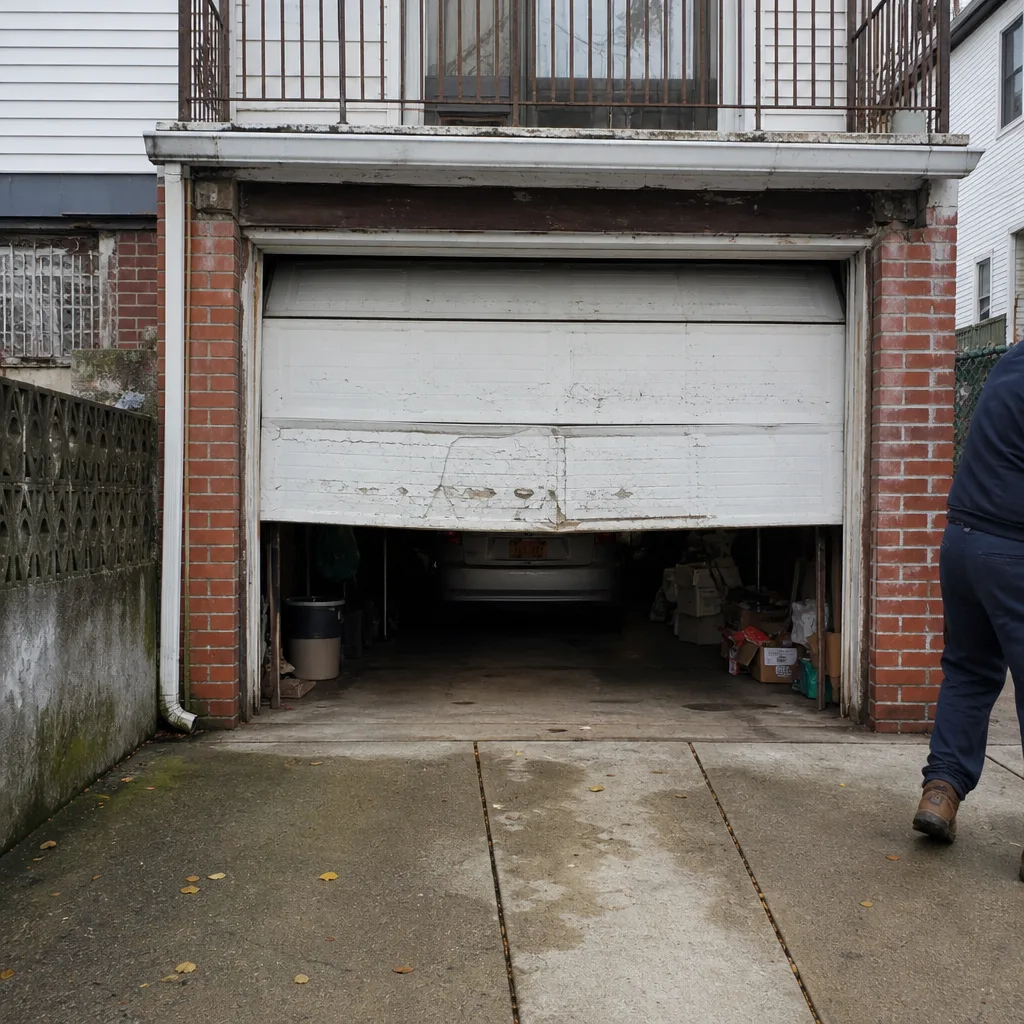 Before
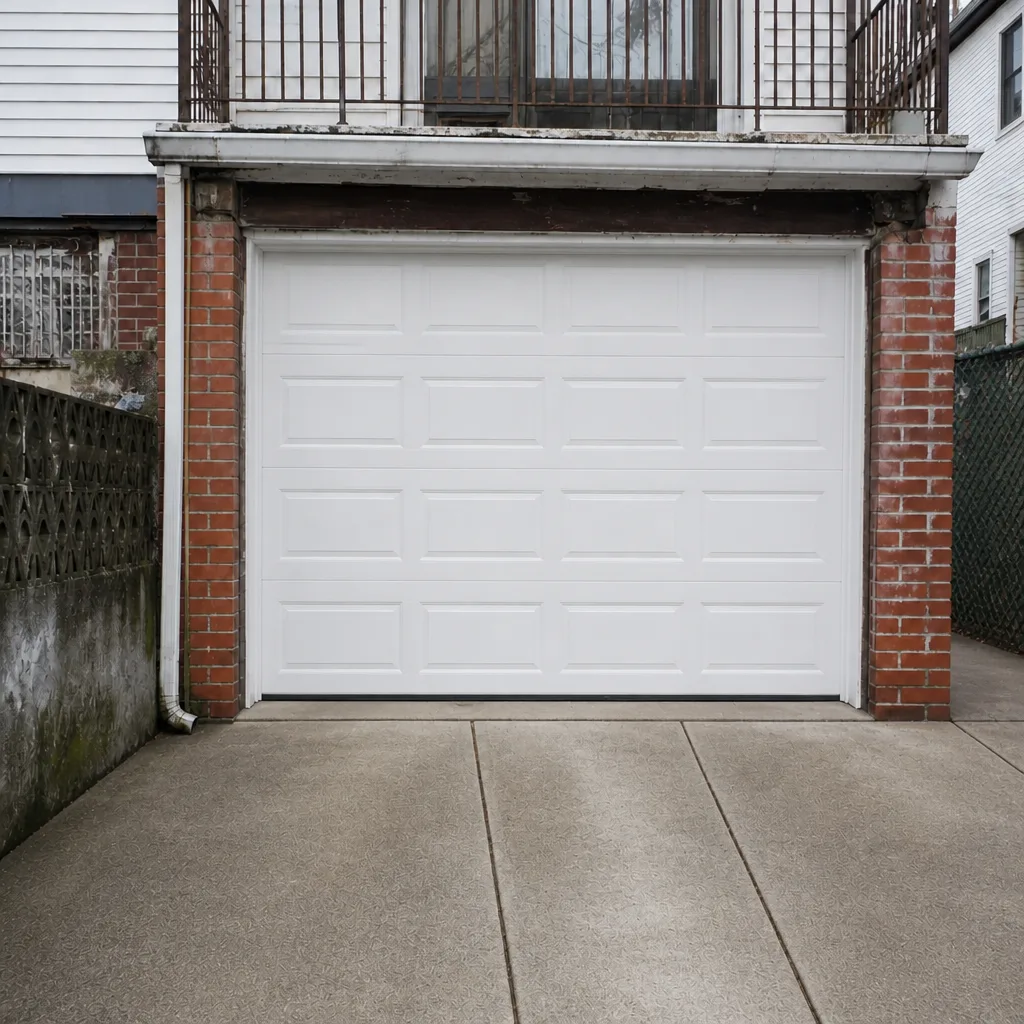 After
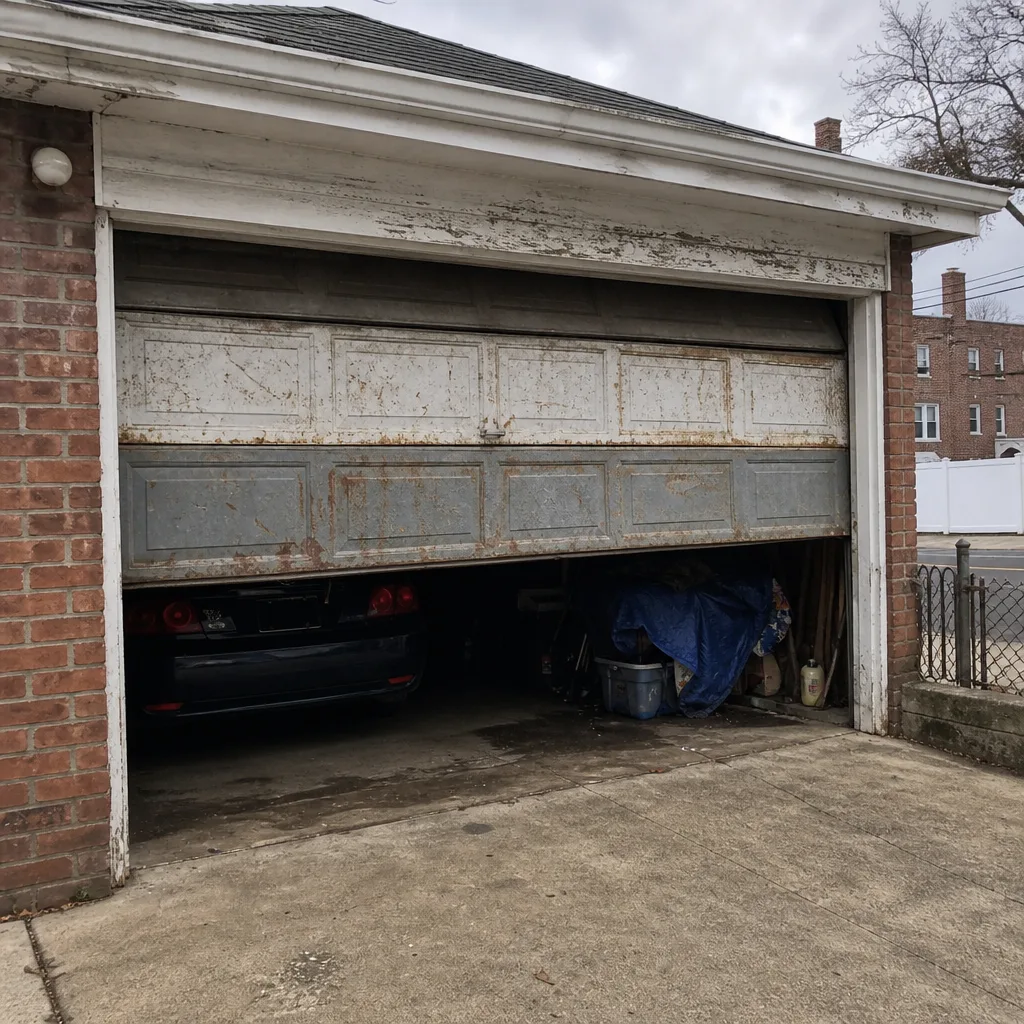 Before
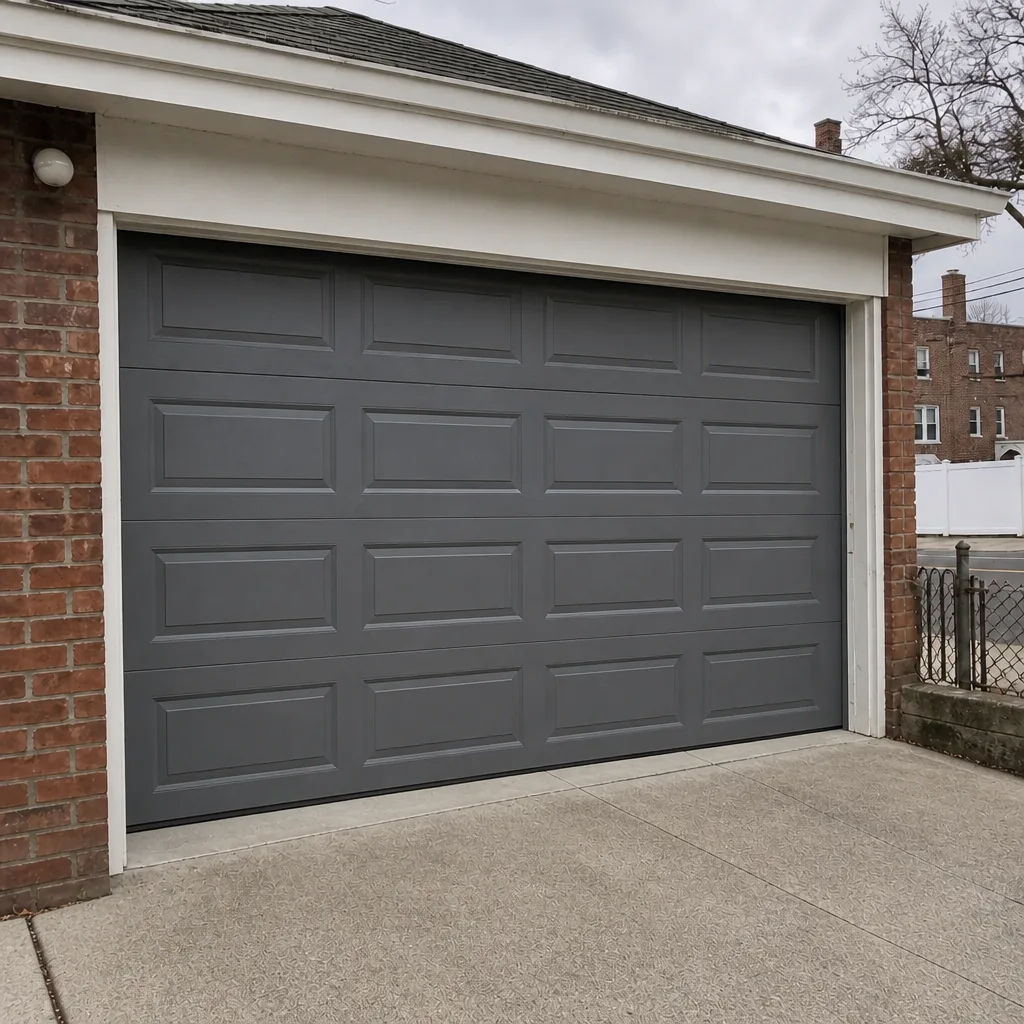 After
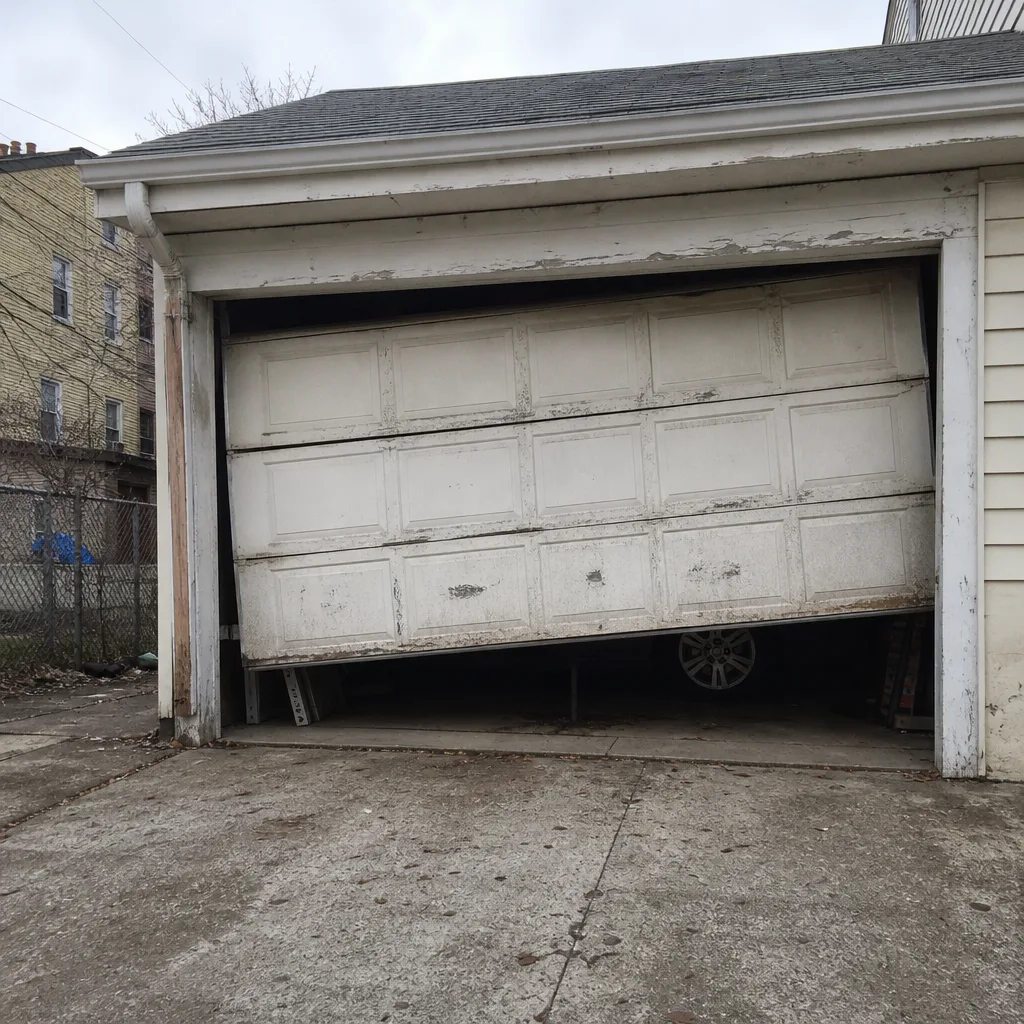 Before
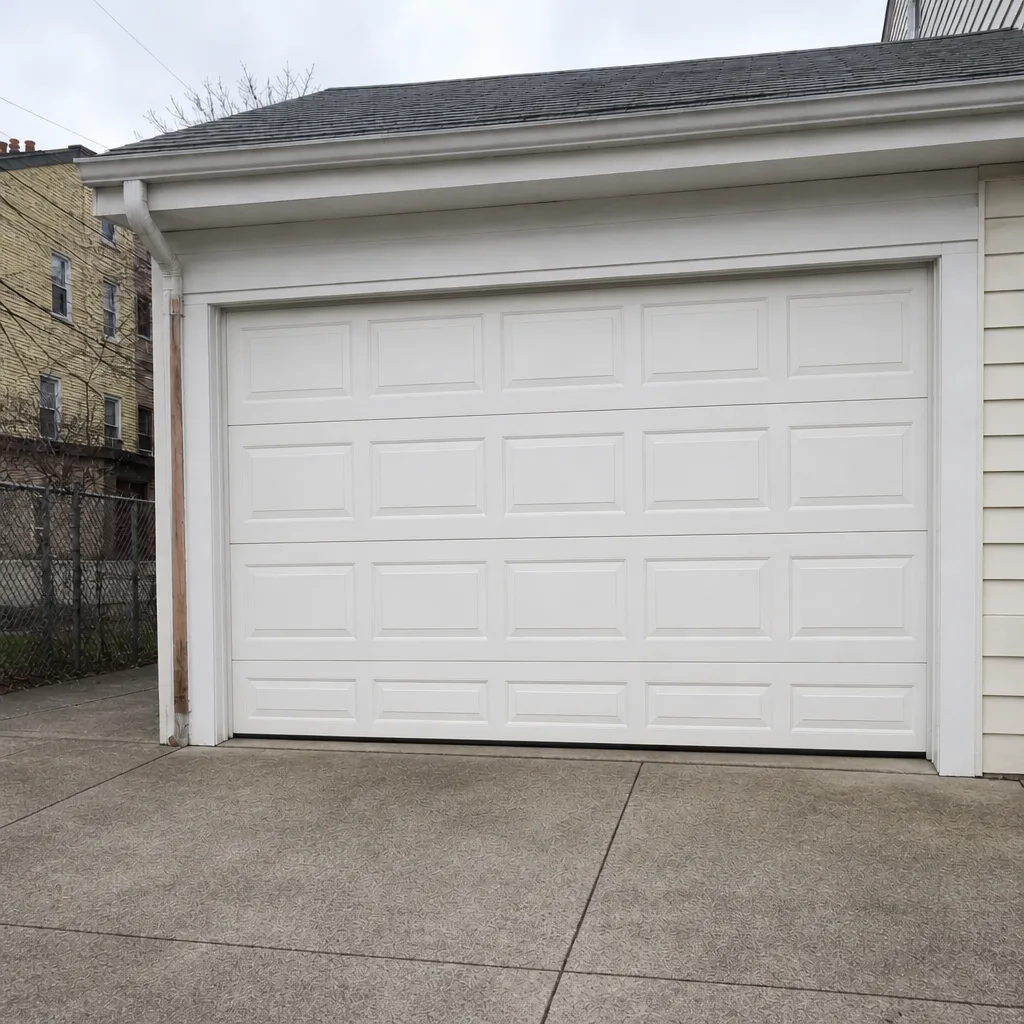 After
When to Call a Professional
Call a professional if you’ve heard a bang or a snap, if the door hangs crooked, if it feels heavy by hand, if the opener runs but the door doesn’t move, if the door reverses on its own, or if the safety sensors won’t clear after a reset. Call also if the door is stuck open, because a door left up overnight in East Harlem is a security problem you don’t need to live with. For garage door repair East Harlem homeowners rely on a specialist who can identify the root cause quickly, arrive with the right parts, and carry out the work safely. Garage Door Repair East Harlem offers free estimates in East Harlem. Call (866) 401-4528. We answer 24/7, with fast dispatch from 7am to 7pm, Sunday through Friday, and we’re closed on Saturday. A call outside dispatch hours is booked into the next opening.
Frequently Asked Questions
A single torsion spring replacement in East Harlem typically costs $180 – $340 per spring, and a matched pair usually runs about twice the single-spring price because both are replaced together. The estimate is written and agreed before any work starts, so the price you’re quoted is the price you pay. Call (866) 401-4528 for an exact quote. Estimates are free.
No, and be wary of anyone who says yes. The spring diagnosis requires seeing whether there’s a visible break in the coil and listening for whether the opener motor is running without moving the door. That’s a five-minute look on site, not a phone call. We quote from what we find, not from a guess.
Yes, for urgent failures like a broken spring, a snapped cable, or a stuck door, we prioritize same-day service. Call (866) 401-4528. We answer 24/7, and our fast dispatch runs from 7am to 7pm, Sunday through Friday.
No. With a broken spring, the door’s weight is carried by the opener rail and cables, not a counterbalance. Lifting it by hand can bring the whole door down and cause serious injury. Leave the door closed, keep clear of it, and call for a same-day repair.
We work on the leading residential brands, including Genie, Clopay, Amarr, and Wayne Dalton, along with LiftMaster, Chamberlain, Craftsman, and Raynor. That’s 8 brands, so the part on your specific door is likely one we’ve worked with before. The right part for your door, not a workaround.
The written estimate is the price. If we find something the initial look didn’t show, we stop and re-quote before we touch the door. Nothing gets added after the work is done. Call (866) 401-4528 for a free estimate in East Harlem.
The Bottom Line
Five root causes account for nearly every garage door failure in East Harlem: broken springs, snapped cables, misaligned tracks, failed openers, and sensor faults. You can identify which one you’re facing from the inside of a stuck garage using nothing but sight and sound, and getting that diagnosis right is the difference between a straightforward repair and an expensive misread. Springs and cables carry stored energy and belong in the hands of a specialist. Sensors, lubrication, remotes, and basic resets are homeowner-safe. When in doubt, call before you touch the door. We work on the brands most East Harlem doors actually are, and the written estimate is the price.
Written by the team at Garage Door Repair East Harlem.
Contact
Garage doors are all we do, whether it’s springs, openers, panels, or a full door. If your garage door is stuck, grinding, or simply too heavy to lift, call (866) 401-4528 for a free estimate. We answer 24/7, with fast dispatch from 7am to 7pm, Sunday through Friday. Front-range questions, brand-specific parts, and same-day emergencies on the phone, and the written estimate in your hand before any work starts.